THE CHALLENGE:
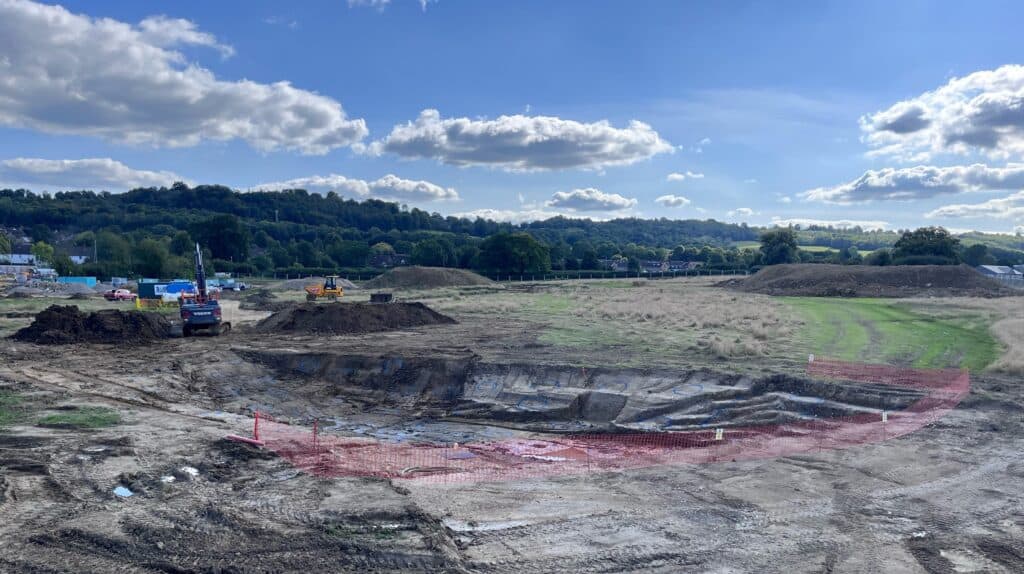
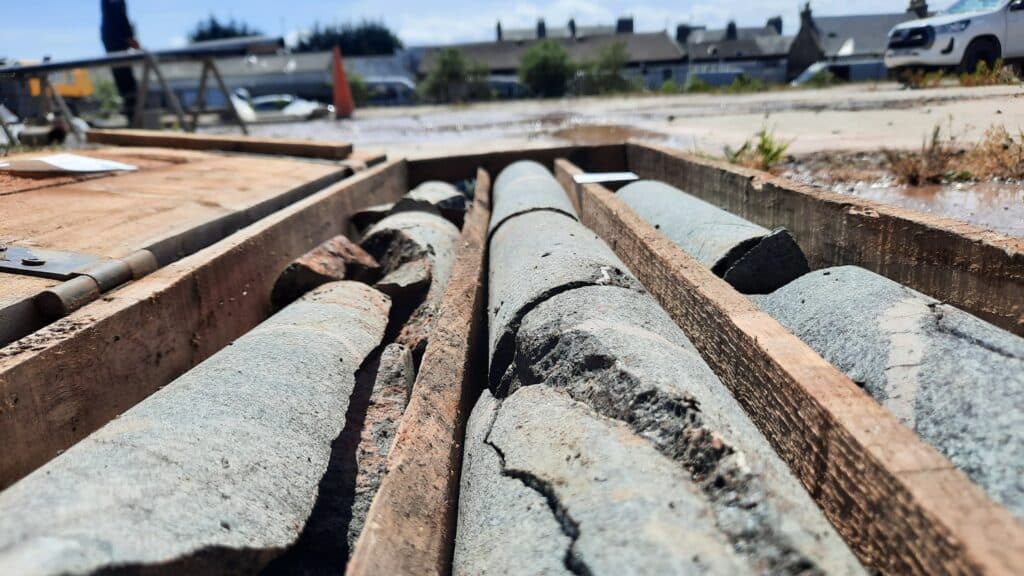
A diesel saturated smear zone (with C12 to C21 Aliphatic / Aromatic TPH) associated with a former underground diesel AST was identified at a depth of 4-6mbgl within weathered (structureless) chalk. Ex-situ remediation was not commercially viable due to tight logistical constraints requiring sheet piling and off-site disposal of all excavated soils. Moreover, given the site was under active construction, there would be limited opportunity for staged in-situ treatment.
OUR SOLUTION:
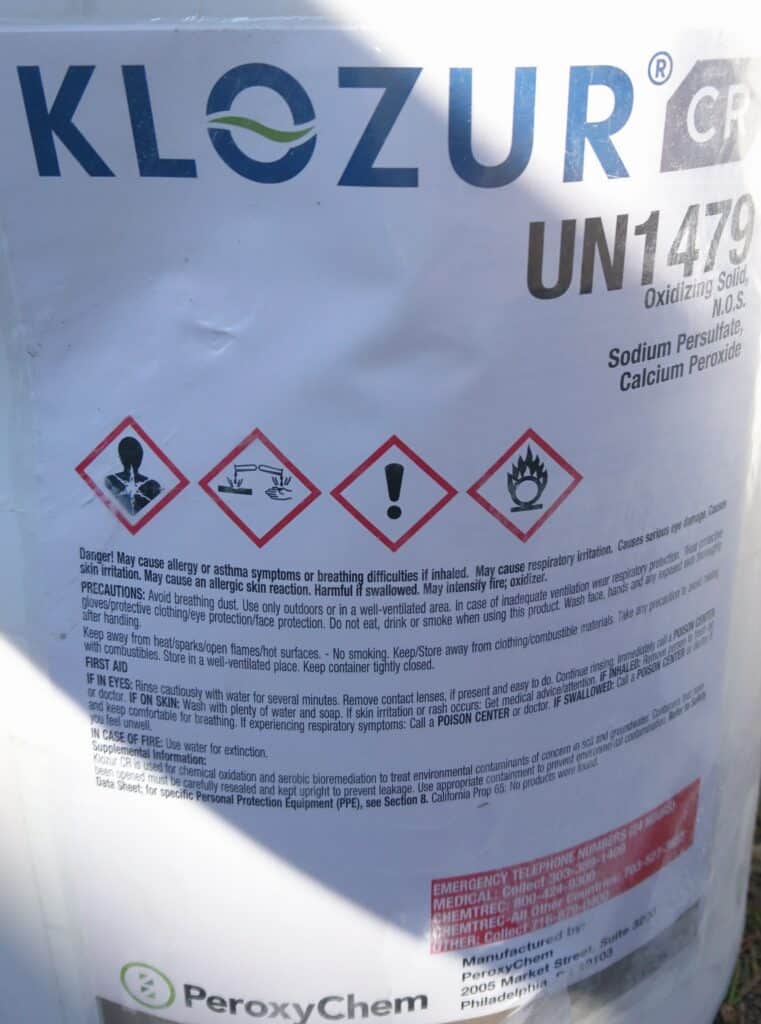
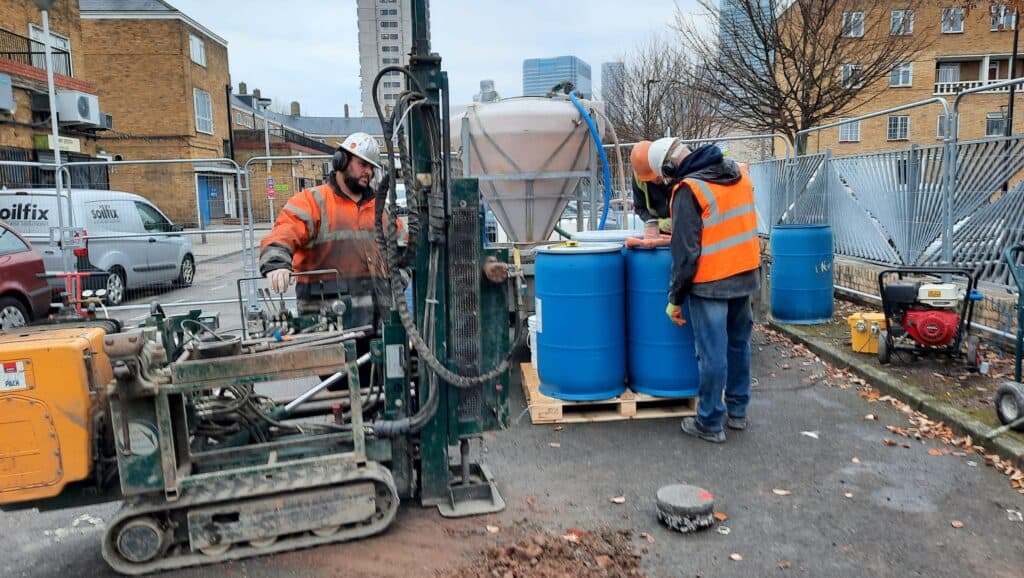
A ‘one-stop’ treatment solution, KLOZUR-CRTM was selected for in-situ treatment of the diesel saturated smear zone and to reduce dissolved phase TPH – this process combines In-situ chemical oxidation (ISCO) for rapid mass reduction and desorption of TPH from the smear zone, with a controlled Oxygen Release activator component for enhanced aerobic bio-degradation of desorbed / dissolved hydrocarbons over a 9 to 12 month period post-injection. Following a successful pilot feasibility trial, Soilfix ensured effective distribution of the remediation amendment within the target treatment zone via the following approaches:
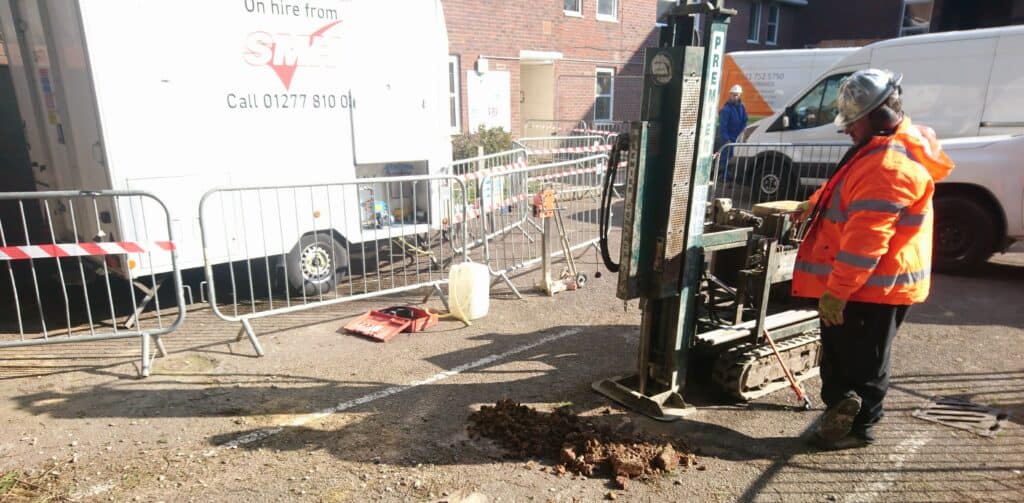
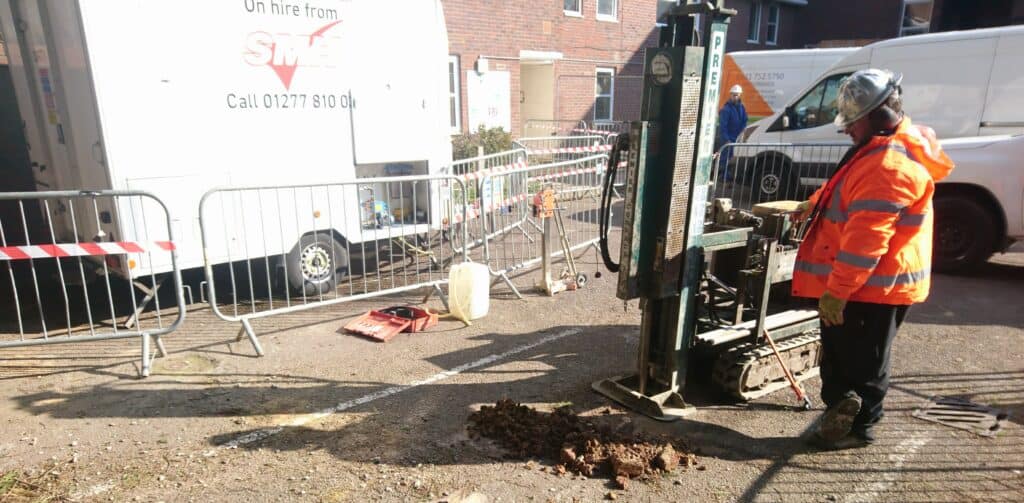
- Coring and vacuum excavation of the upper 1.2m of made ground for service and shallow impediment clearance, infilled with a cement-bentonite plug prior to injection;
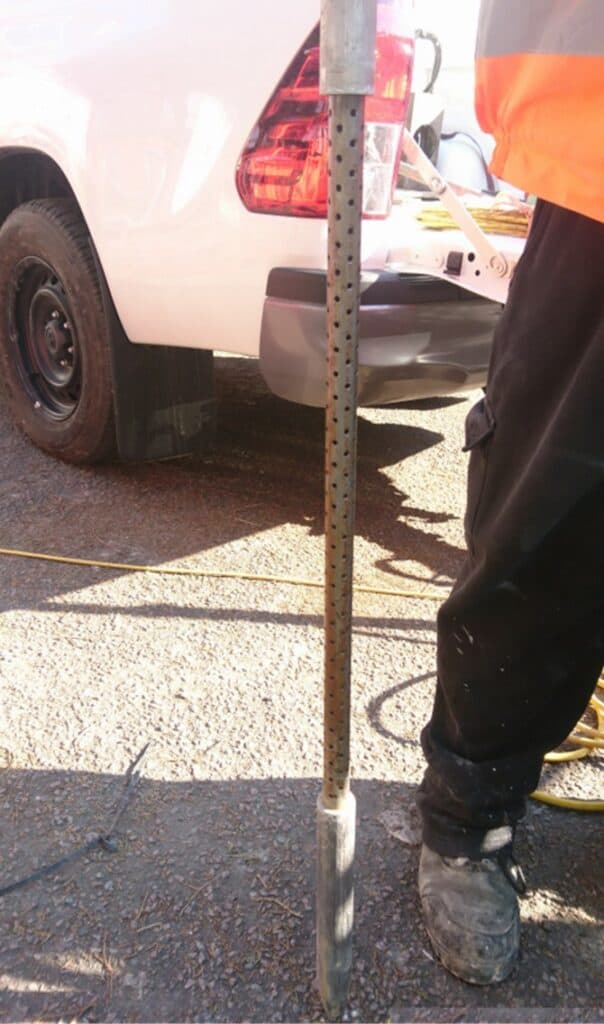
- Direct-push injection of Klozur-CR using a drill equipped with a percussive hammer to drive injection rods into the ground;
- The injection tip was equipped with a 600mm screen to achieve an even distribution of the liquid amendment at each injection interval;
- 25nr direct-push point injections were undertaken across the 275m2 delineated source area (in 0.5m increments across the target treatment zone of 4-6 mbgl);
- Oxygen levels and pH readings of the target aquifer was monitored in nearby available wells during injection treatments to ensure the smear zone was fully influenced; and,
- Post-injection monitoring of field parameters and laboratory testing of TPH in groundwater was carried out for a period of 12 months.
Post-injection monitoring confirmed dissolved TPH concentrations were reduced in all verification wells below the 75% betterment criteria agreed with the EA, enabling our client to meet their planning condition obligations pertaining to contamination below the site.