Services

Environmental Remediation & Restoration Works

Highly sensitive environmental settings often demand remediation and restoration that can manage contamination, ecology, water, dust, odour and long-term site stability together. On environmentally sensitive projects, technical delivery alone is not enough. Clients need confidence in HSQE standards, monitoring, quality assurance and control of wider impacts.

Soilfix brings remediation, restoration and environmental controls together in one structured approach, helping clients satisfy complex technical and stakeholder requirements.

Carrying out brownfield environmental remediation and enabling works over the past 20 years, Soilfix has developed extensive in-house experience of multi-disciplinary activities in a variety of settings.

This includes working on, adjacent to and near water bodies (both inland and tidal), former quarry sites, high water / high silt environments, unstable slopes, as well as ecologically sensitive locations with protected status.

Working in a sensitive environment?

Talk to Soilfix about remediation and restoration solutions designed for complex environmental settings.

CASE STUDY

Former Landfill, Northern Ireland

Soilfix was appointed under NEC4 to deliver remediation, restoration and environmental improvement works on a large legacy landfill in a highly sensitive setting. The project demonstrated our ability to combine remediation, environmental control and robust HSQE management on complex sites where the environmental stakes are high.

Environmental Restoration

Environmental Restoration Works

Sites requiring ‘Environmental Restoration’ present a variety of challenges including health and safety management, pollution control, ecological mitigations, invasive weeds and sustainable materials management.

Early engagement with an experienced contractor is key to maximising the potential environmental remediation benefit of your project.

Think we could help your project?

Lagoon, Pond & Surface Watercourse Enhancements

Lagoon, Pond & Surface Watercourse Enhancements

Lagoons, balancing ponds and drainage ditches often experience capacity issues (due to sedimentation). Sediments can become contaminated by industrial effluents, highway runoff, pollution incidents, etc. Restoration of waterbodies is required for improved capacity, pollution control, biodiversity enhancement, or a combination of these.

Soilfix has experience of carrying out controlled dredging of watercourses and dealing with sediments (often contaminated) in a sustainable, cost-effective and safe manner. Sediment treatment includes sludge dewatering, bioremediation, stabilisation / solidification or removal off-site to permitted soil treatment facilities.

We are also experienced in carrying out contaminated sediment encapsulation on open water bodies using floating plant and equipment, to provide a more sustainable, cost-effective and less disruptive approach to help improve water quality and mitigate environmental risks. Significant biodiversity enhancements result from such works providing suitable habitats for aquatic flora and benthic organisms, resulting in a positive knock-on effect for higher trophic organisms.

Soil Improvement

Soil Improvement

Soilfix has extensive experience in re-purposing poor quality subsoil and topsoil from both brownfield and greenfield sites into ‘suitable for use’ materials that meet the site-specific requirements of landscape architects.

Soils can be subjected to screening / sorting, to remove oversize / sharp / deleterious material, then rotavated with a bespoke blend of washed sand, compost mulch, biochar and other amendments, to provide a suitable growth medium for a variety of land uses including gardens, landscaping, allotments, restoration capping etc. Soil ‘tilling’ with proprietary amendments can also reduce the bioavailability, toxicity and leachability of persistent organic / inorganic compounds.

Aside from meeting Circular Economy objectives, this sustainable re-use of valuable soil resources helps increase the carbon sequestration potential of our valuable soil resources.

Slope / Bank Reinforcement

Slope / Bank Reinforcement

Derelict sites often have geotechnically unstable, boundary slopes or riverbanks that pose a risk to site occupants and, potentially water quality. Soilfix has successfully implemented a variety of ‘soft engineered’ solutions for unstable slopes on former landfills, quarries and derelict industrial sites. These include ‘bio-engineered’ slope reinforcement, biodegradable erosion control mattresses, composite capping systems and mechanically stabilised earth (MSE) embankments.

Geotechnically poor made ground often requires processing to remove oversize / deleterious materials and stabilisation / solidification for re-use as structural fill within re-engineered slopes. This approach provides significant cost savings compared to off-site disposal and import of quarried aggregates, helping clients meet their Circular Economy objectives.

Soft engineered bank reinforcements are typically seeded with a meadowgrass mix, to provide effective erosion control and establish ecologically diverse habitats – all supporting Biodiversity Net Gain (BNG) development requirements.

Quarry Restoration

Quarry Restoration

Derelict former quarry sites present fantastic opportunities for residential development, biodiversity enhancement, public open space areas and other land-uses. However, such sites frequently come with challenges including site re-engineering and re-profiling, sustainable materials management, invasive weeds / ecological mitigations, biodiversity enhancement and slope stability management.

Soilfix is experienced in carrying out multi-disciplinary reclamation projects at derelict quarry sites to bring them into beneficial use in the most sustainable and cost-effective manner.

Talk to our team

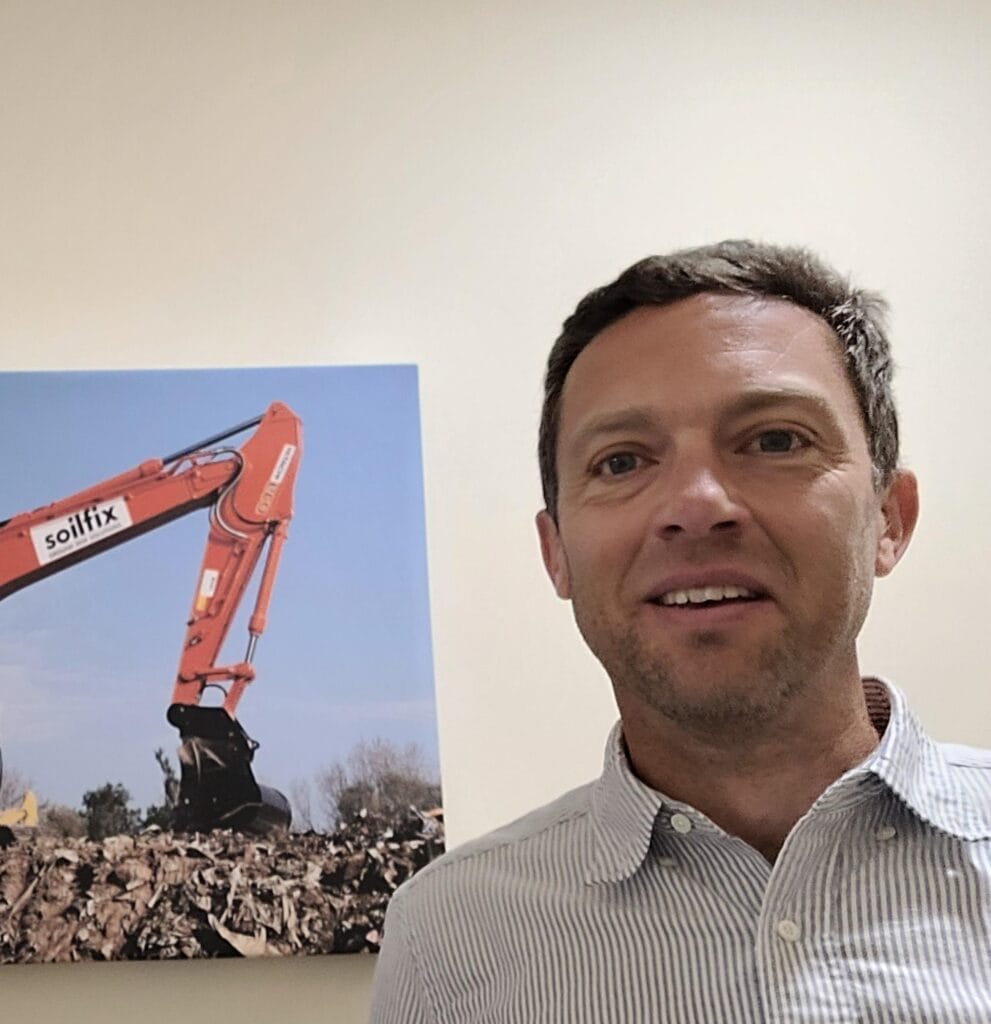
Peter Howland
Managing Director

Environmental Remediation & Restoration Works – Frequently Asked Questions

It includes removing or treating pollutants, stabilising ground conditions, managing contaminated / non-contaminated water, restoring water storage infrastructure and ecosystems. On legacy industrial sites, former landfills or derelict quarries, this often means managing hazardous waste, improving soil and water quality, and preparing land for safe future use or fulfilling restoration obligations under planning and permitting.  Poor quality subsoil and topsoil often requires modification and re-purposing for sustainable re-use.

We handle a wide range of contaminants, including, hydrocarbons, heavy metals, asbestos containing materials, chemical residues, and landfill leachates (often containing ammoniacal nitrogen). We also address physical hazards such as unstable ground and waterlogged areas.

We implement specialised containment and treatment strategies to prevent contamination of surface and groundwater. This includes erosion control, sediment management, and ecological restoration to protect aquatic habitats.  Works on water bodies requires the use of specialist plant and equipment, including rescue boats, to execute the works in a timely and safe manner.

Our wide variety of services include soil improvement, slope / riverbank re-grading, bio-engineered stabilisation, capping systems, vegetation planting, sediment removal & encapsulation, leachate / stormwater infrastructure, natural treatment systems and habitat creation to restore biodiversity, stabilise the site and manage water for long-term sustainability.

We follow strict environmental regulations, conduct detailed risk assessments, and use best-practice techniques to reduce disruption, control pollution and minimise impact to biodiversity. Works are often carried out in close collaboration with ecological specialists to ensure habitat manipulation, protected species translocation and protective fencing requirements are implemented in accordance with site-specific Habitat Management Plans.