The Challenge
The site was the location of a former boiler house and was impacted with Light Non-Aqueous Phase Liquid (LNAPL) heating oil and dissolved Total Petroleum Hydrocarbons (TPH) in the groundwater. The site is in a dense urban area in close proximity to residential housing and earmarked for development as social housing. Remedial works were designed to achieve rapid reduction of contaminant concentrations. Remedial works were also designed to prevent disturbances to the neighbouring residents.
Our Solution
Remedial objectives were derived by the consultant. Soilfix provided significant technical support to the client (via the consultant) before remediation began including site attendance during investigations and monitoring by the consultant. This input allowed Soilfix to design a remedial methodology that fulfilled the remedial objectives.
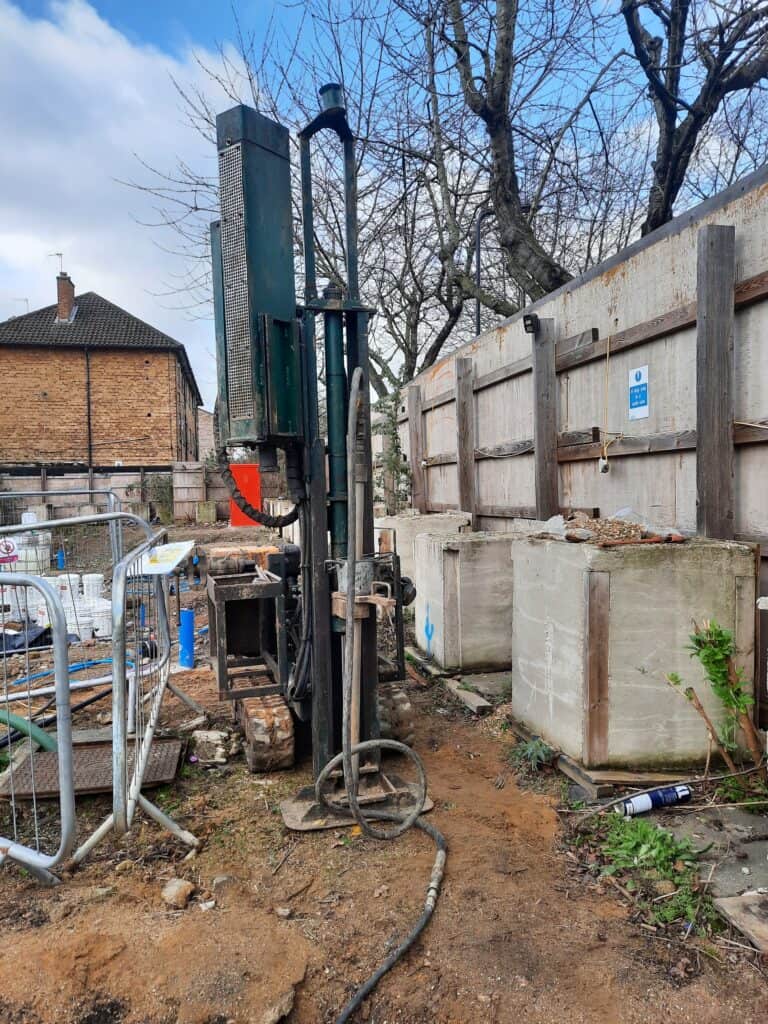
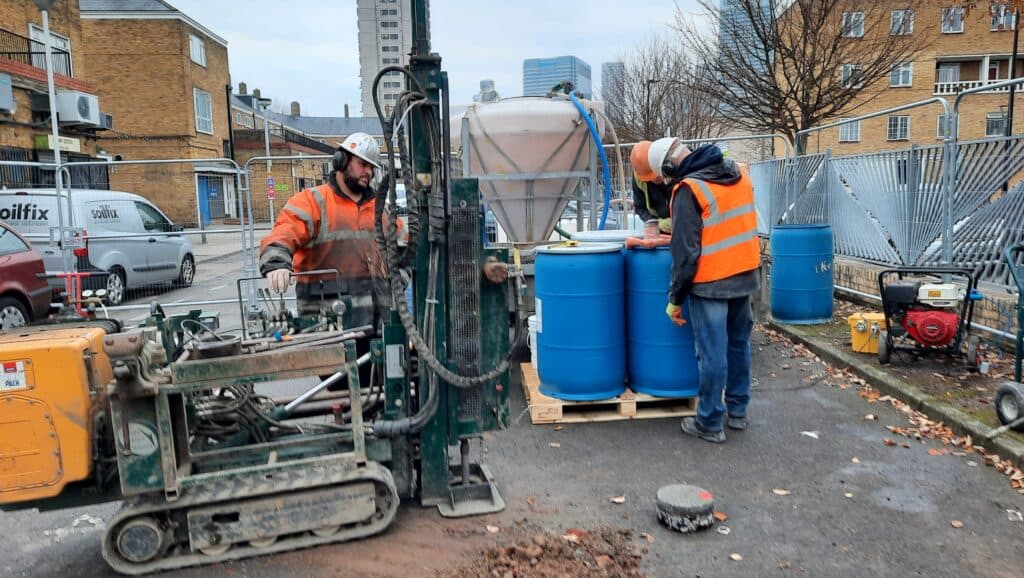
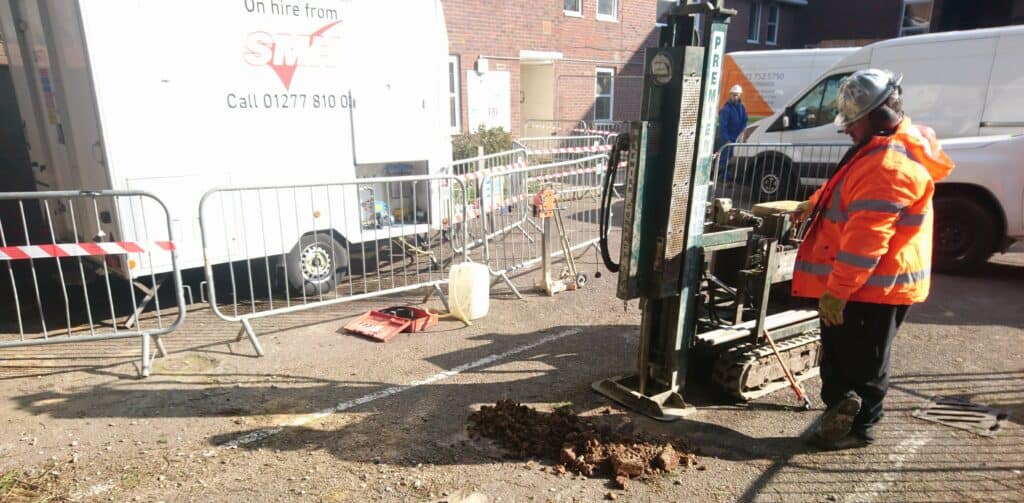
- Installing an intensive array of injection and pumping wells in order to maximise recovery of LNAPL and achieve betterment of dissolved phase TPH contamination;
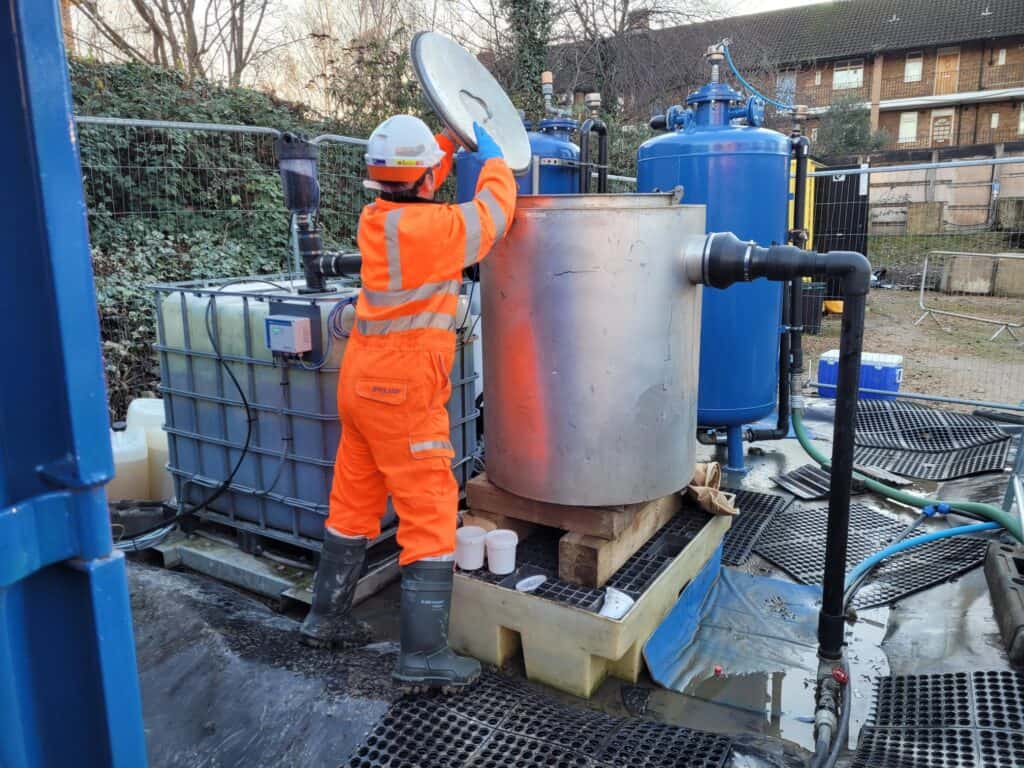
- Installation of a 5m3 per hour groundwater treatment system fitted with automated controls and telemetry to allow 24 hour a day operation and monitoring. The plant was also installed in a soundproof container to prevent noise disturbance;
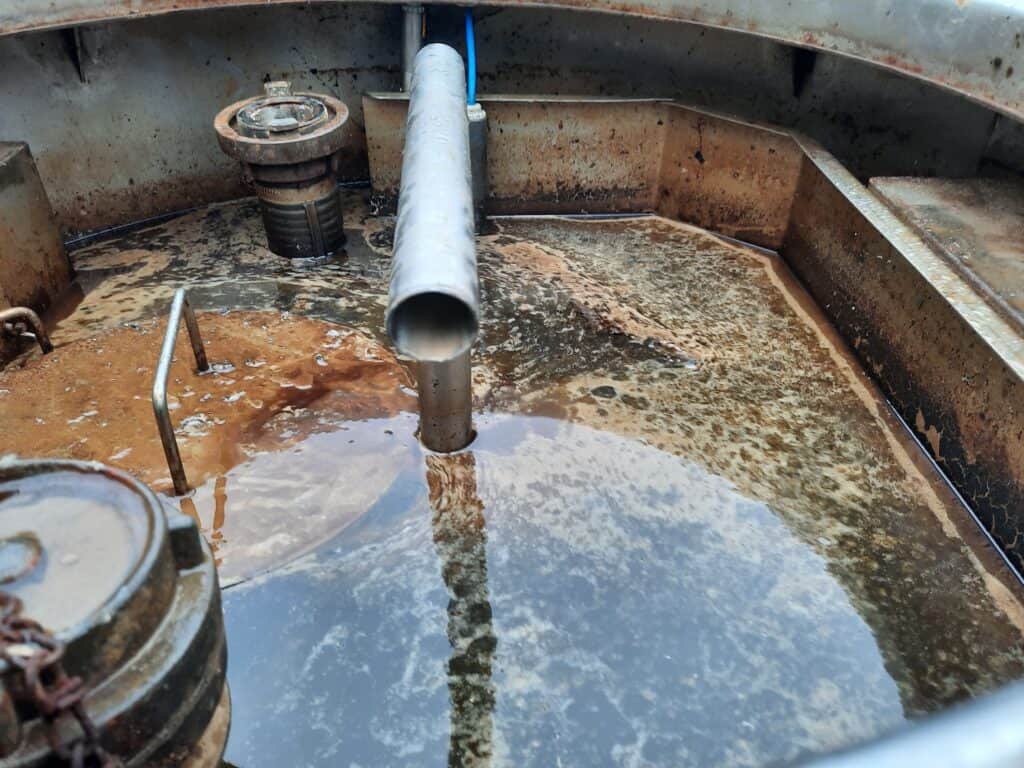
- Operation of top loading pneumatic pumps allowing for LNAPL recovery and groundwater abstraction; and
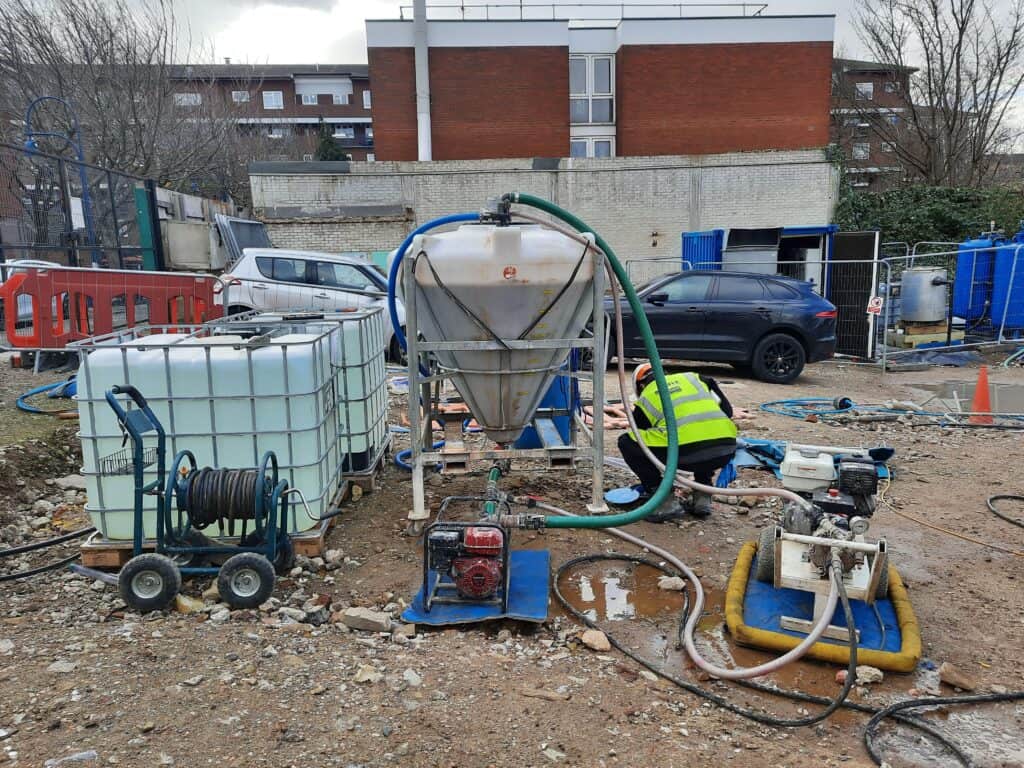
- Four rounds of remediation substrate injections to increase the effectiveness of the groundwater treatment system and prevent rebound of contamination impact. Injections included two rounds of surfactant-like substrate, one round of oxygen release compound and one round of liquid activated carbon.
- Remedial objectives were achieved including 88% reduction in contaminant concentrations within a short 6 month period.