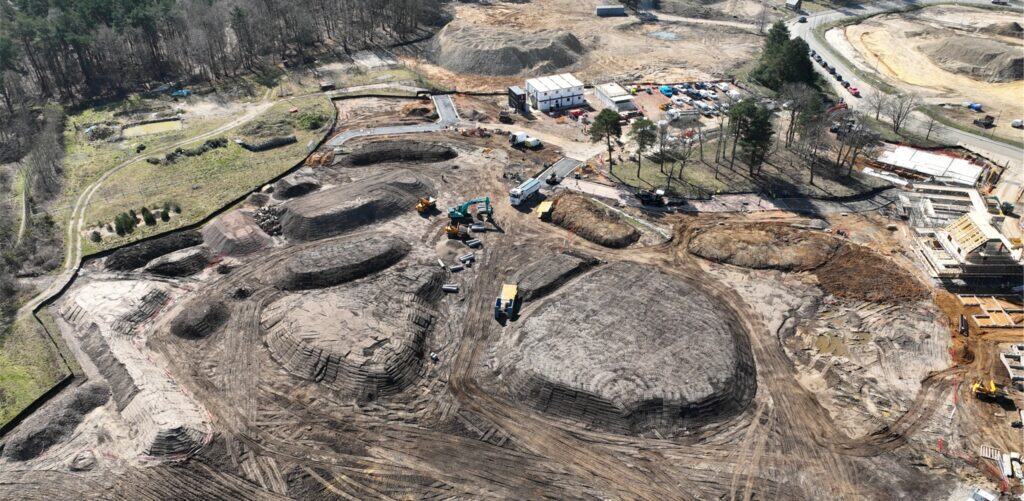
THE CHALLENGE:
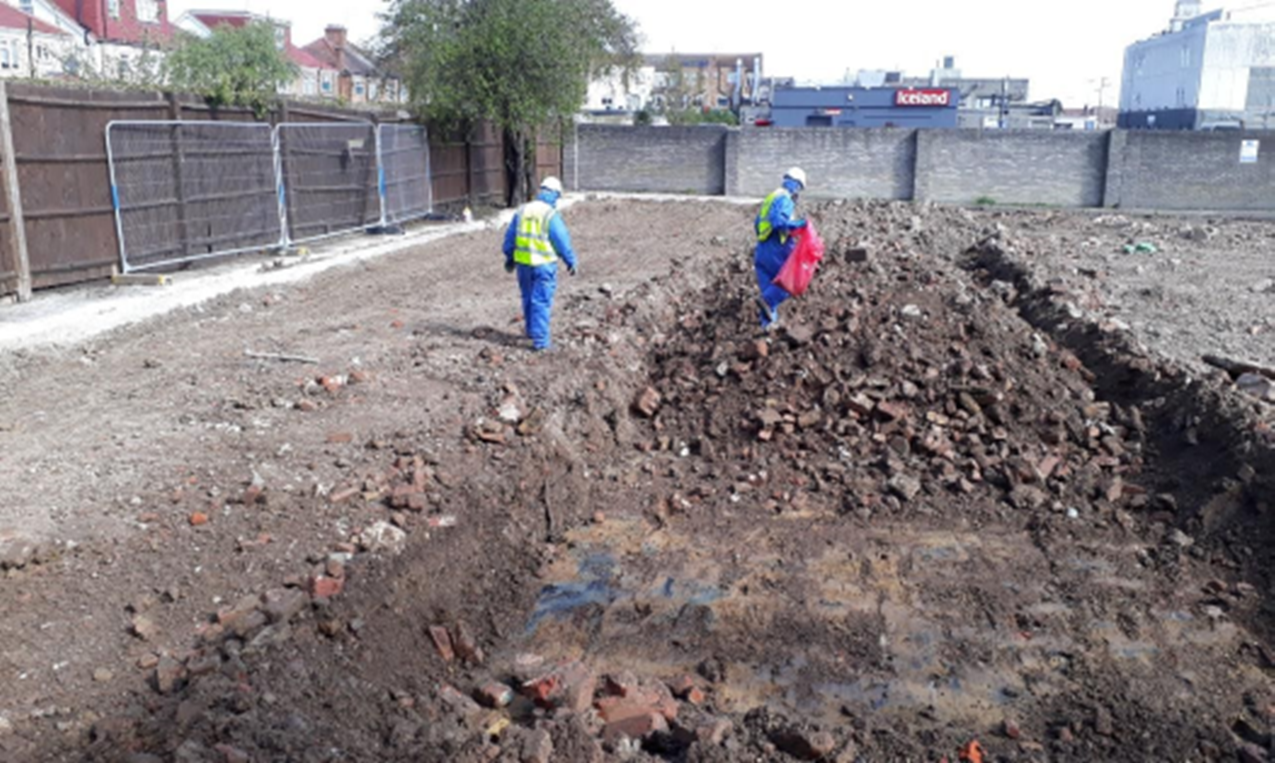
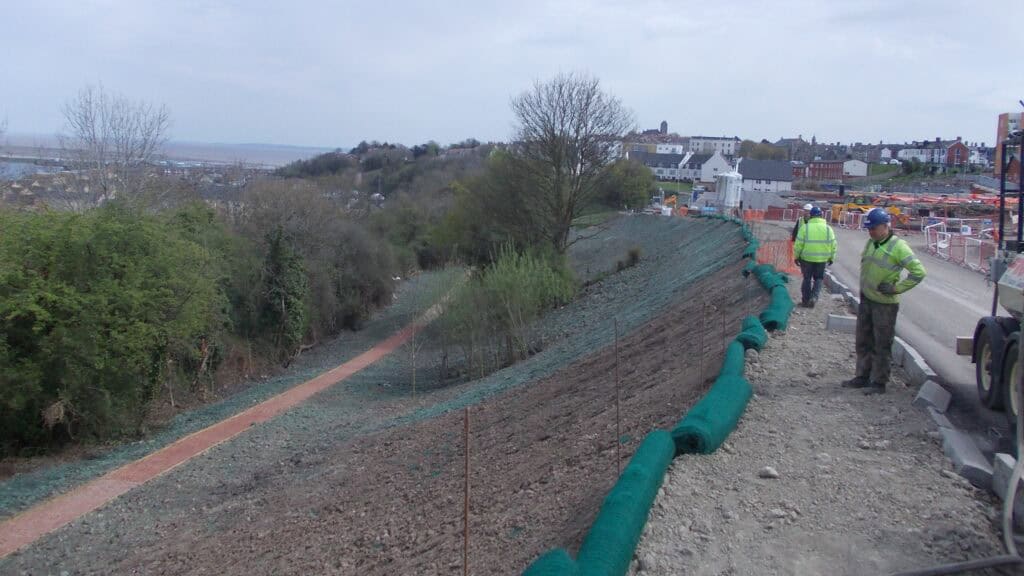
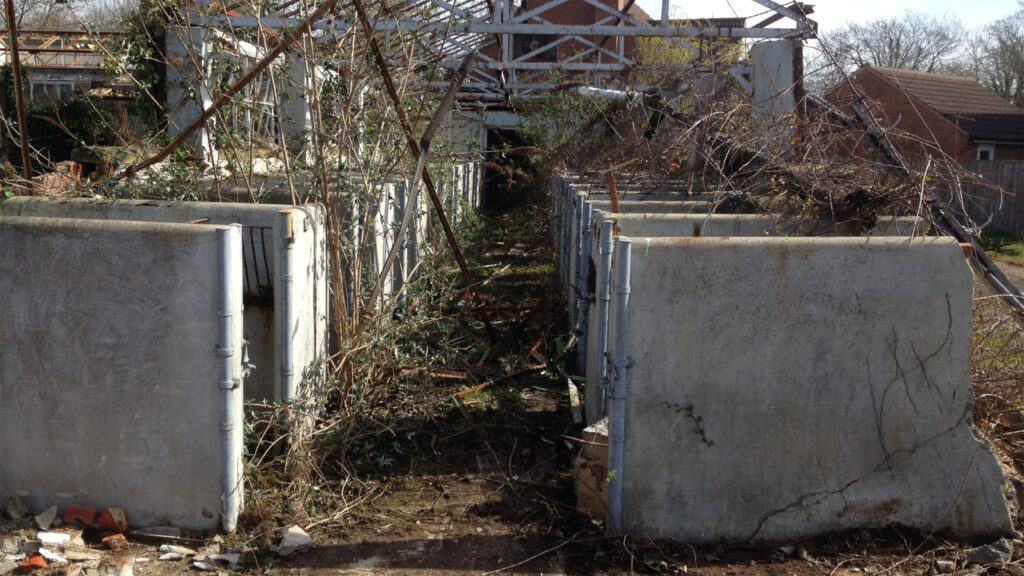
Remediation works were required to address multiple hotspots of hydrocarbon, asbestos containing materials (ACMs) and PAH contamination, that were identified during previous site investigation works. Unforeseen widespread contamination by the invasive weed, Horsetail, was also encountered across the site and supplementary remediation works were completed in conjunction with Soilfix’s main scope of remediation.
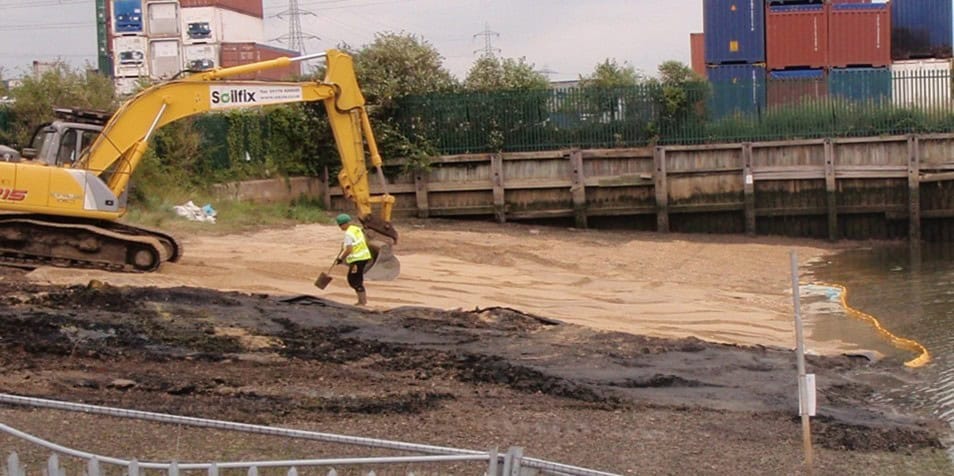
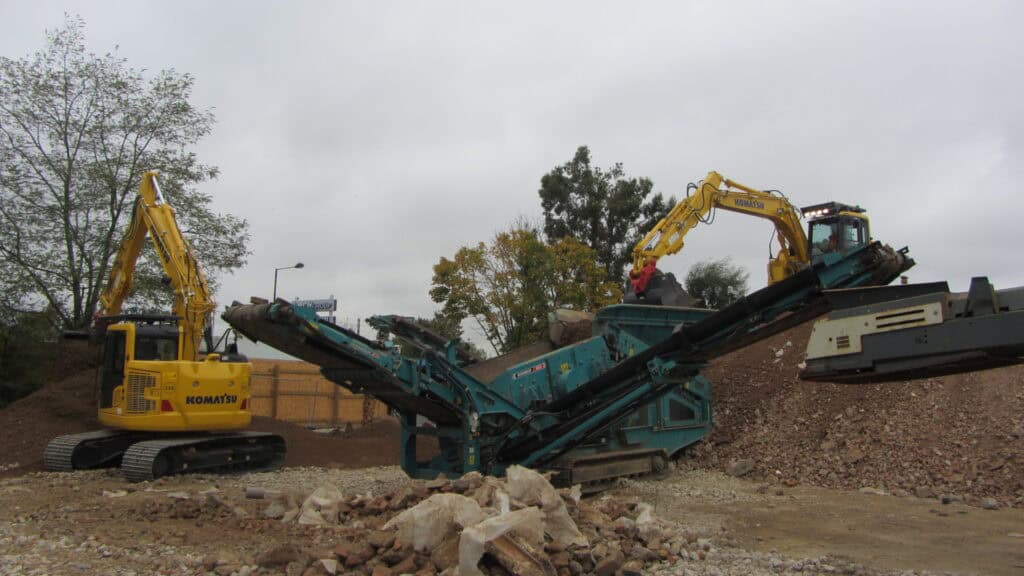
Remedial works were combined with a development platform preparation to required construction formation levels. Significant quantities of tarmac deposits had been emplaced across the scrapyard area, therefore Soilfix utilised this pre-processed material as part of a ‘fill blend’ to improve soft excavated soils prior to cement stabilisation to construct working platform layers.
OUR SOLUTION:
Remedial targets were agreed in conjunction with the Environment Agency and Local Authority, and Soilfix designed and implemented a remediation & enabling works scheme, fully in accordance with CL:AIRE Code of Practice (DoWCoP), which included:
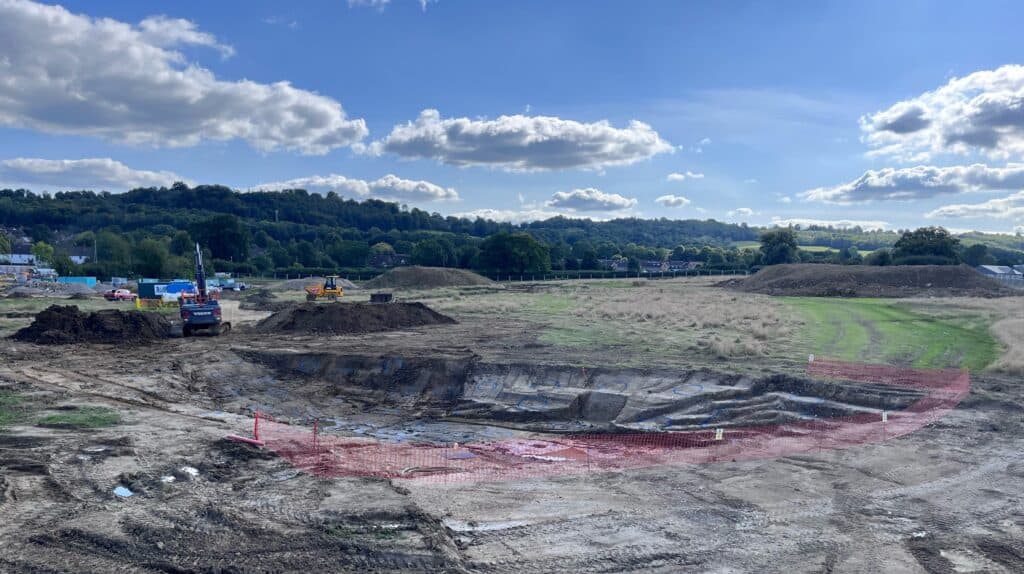
- Targeted excavation of hydrocarbon, ACM and PAH hotspots;
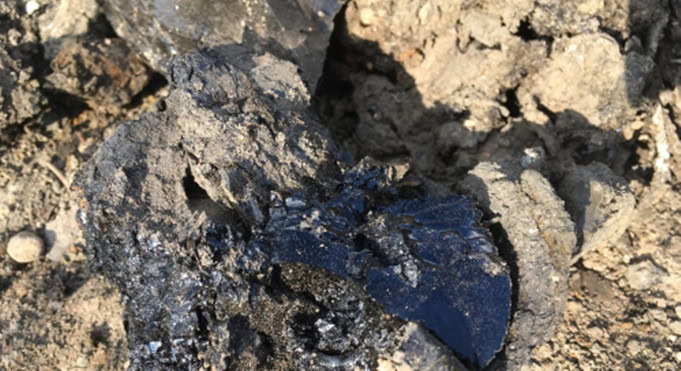
- Segregation and off-site disposal of 50m3 of coal tar contaminated soils and aggregates;
- Pre-treatment and bioremediation of 650m3 of hydrocarbon contaminated soils for on-site re-use;
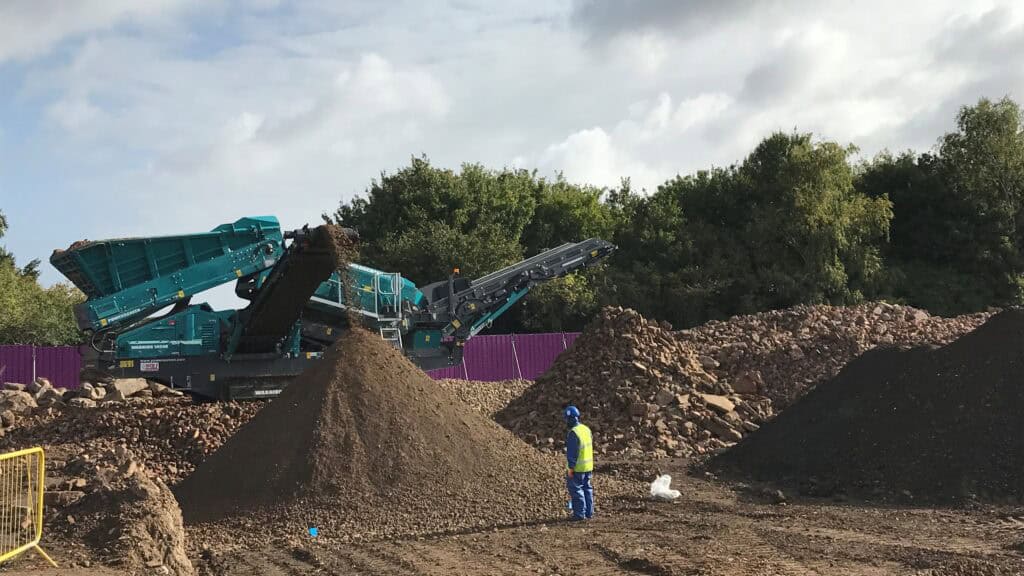
- Processing of site won soils to remove ACM fragments and deleterious materials;
- Stabilisation of 2,100m3 of geotechnically poor clays for re-use within the hybrid piling platform;
- Controlled strip, pe-processing and encapsulation of 2,1003 of soils contaminated with Horsetail – encapsulation within a root barrier was completed beneath a central area of Public Open Space to prevent future access by construction and maintenance workers;
- Processing of site-won aggregates and segreated tarmac for re-use;
- Carrying out site enabling works to facilitate early installation of a main stormwater drain to prevent risks of flooding to the site and adjacent highway (due to incoming sewer backing up),
- Construction of hybrid piling platforms to meet geotechnical specifications.
All remediation works were successfully completed and verified to agreed construction formation levels, achieving >99% materials re-use through innovative processing of site-won materials to a suitable chemical / geotechnical specification. Works were completed on programme to enable ongoing construction (piling and drainage infrastructure)