THE CHALLENGE:
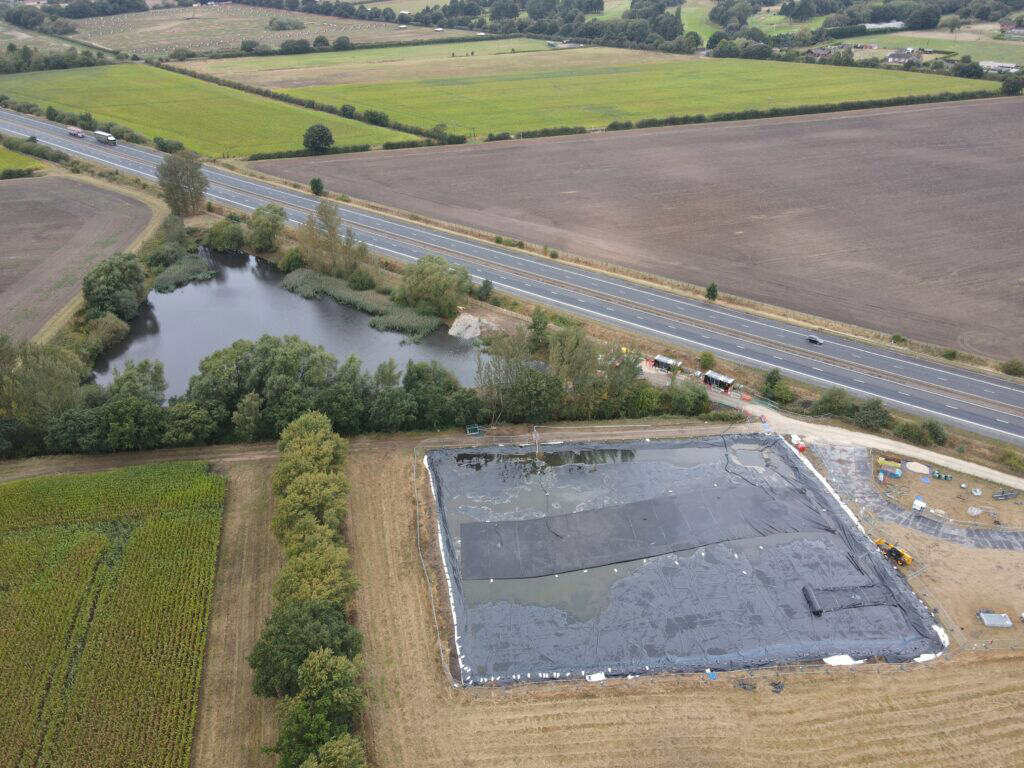
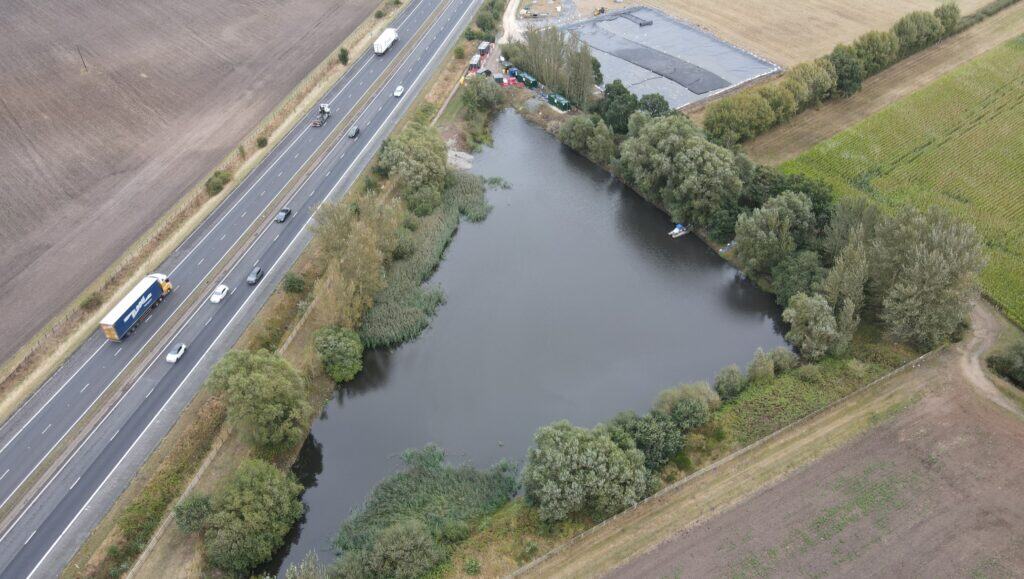
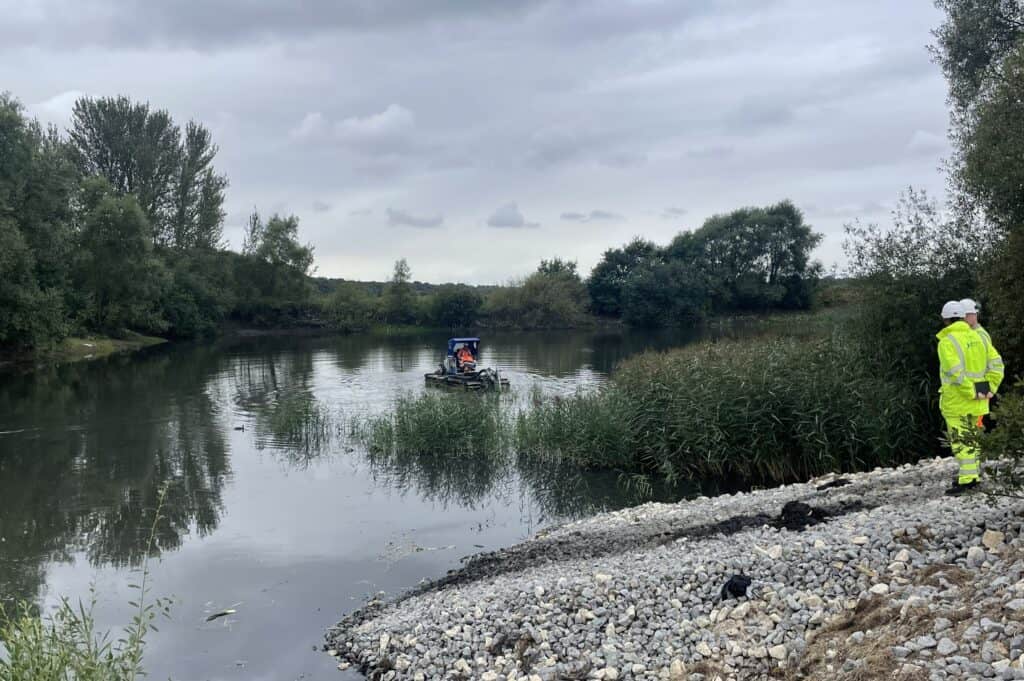
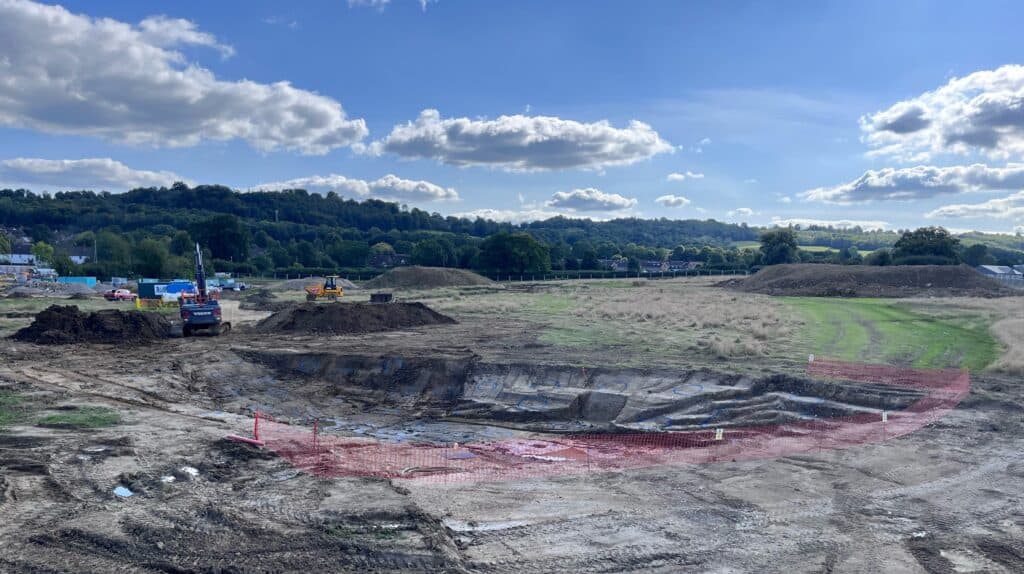
A motorway surface water pond had become significantly silted up to the point of its capacity and drainage flows becoming significantly impaired. This presented a potential risk of flooding and contamination of adjacent farm land and surface water brook. Sampling of the basal silts confirmed TPH concentrations significantly above hazardous waste thresholds which would require removal and disposal. Silts would also need to be sufficiently dry and solid to allow transport in lorries, otherwise incur standard rate Landfill Tax. National Highways retained ecologists were also concerned a traditional intrusive ‘dewater & mechanical scrape’ method would adversely impact upon the biodiversity of the lagoon.
OUR SOLUTION:
Soilfix considered multiple techniques to pump and remove the water from the silts. Field treatability trials were carried out to determine the most appropriate methodology to meet site-specific & client’s requirements. The most suitable solution carried out was:
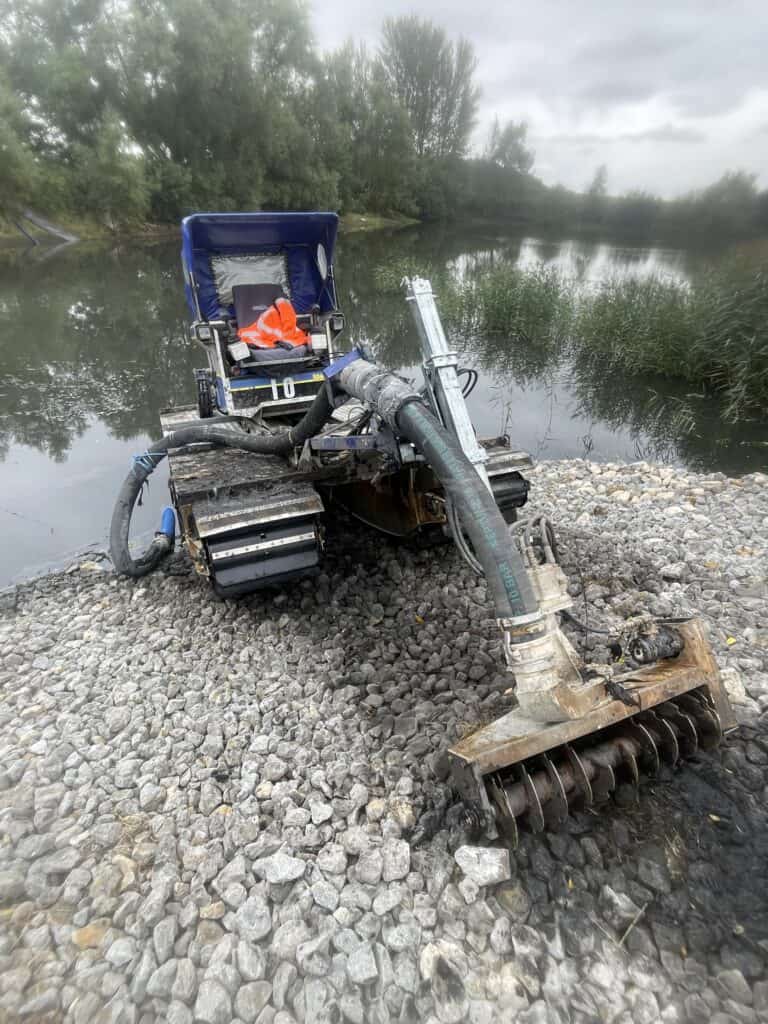
- Site enabling works including construction of a coarse grade aggregate landing ramp and clearance of perimeter reed growth from the water edges;
- Dredging of the silts using a self propelled amphibious dredger boat, pumped through an agitate sludge tank to homogenise the silts/water and biodegradable flocculant applied;
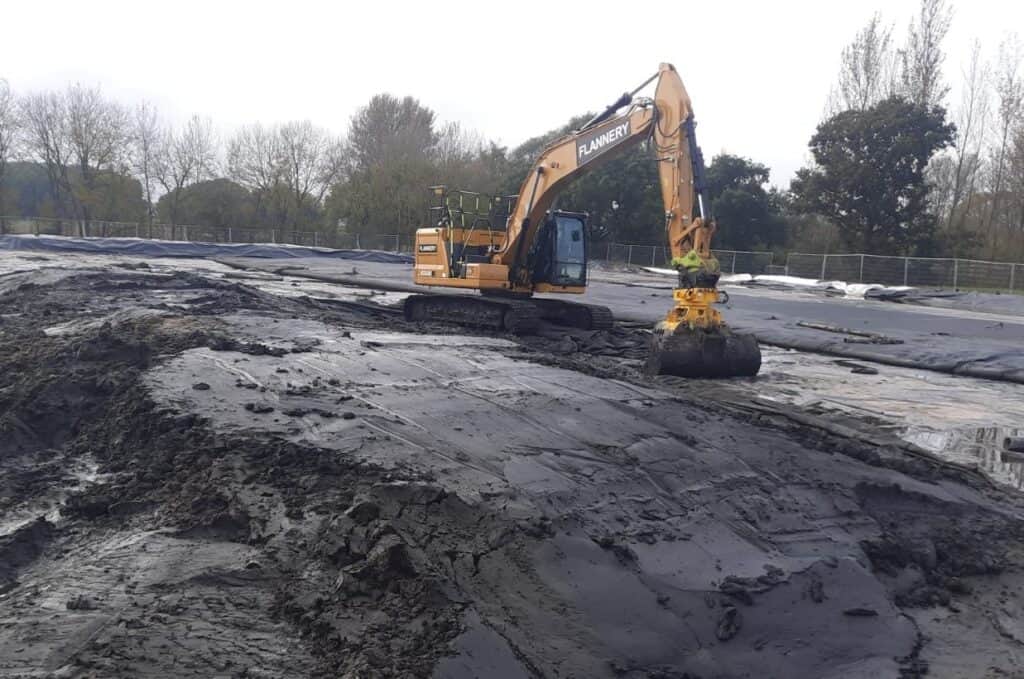
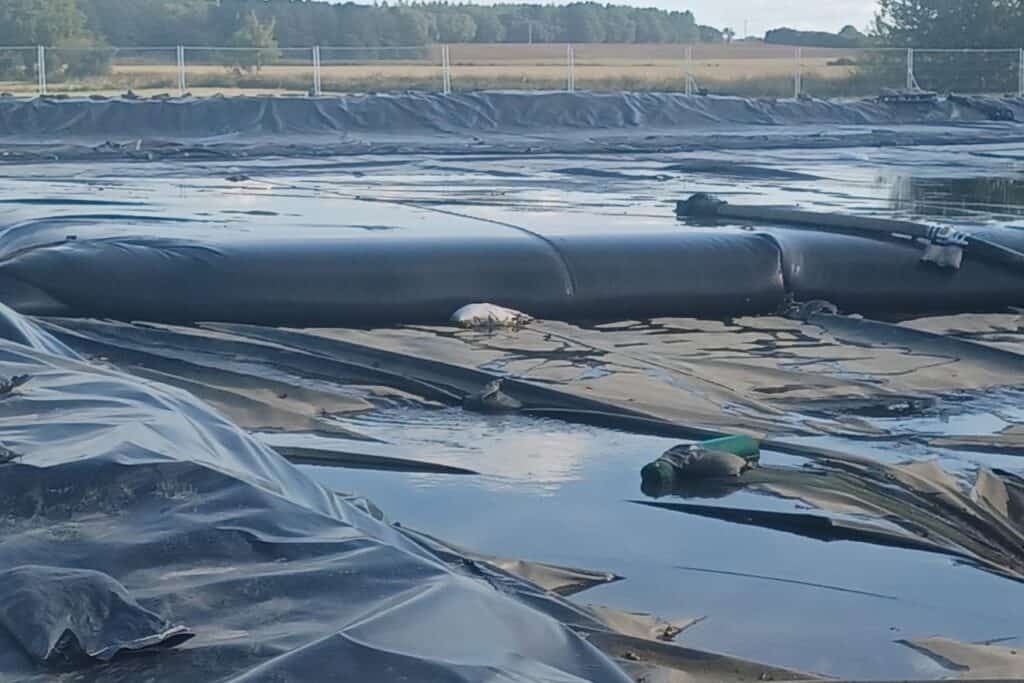
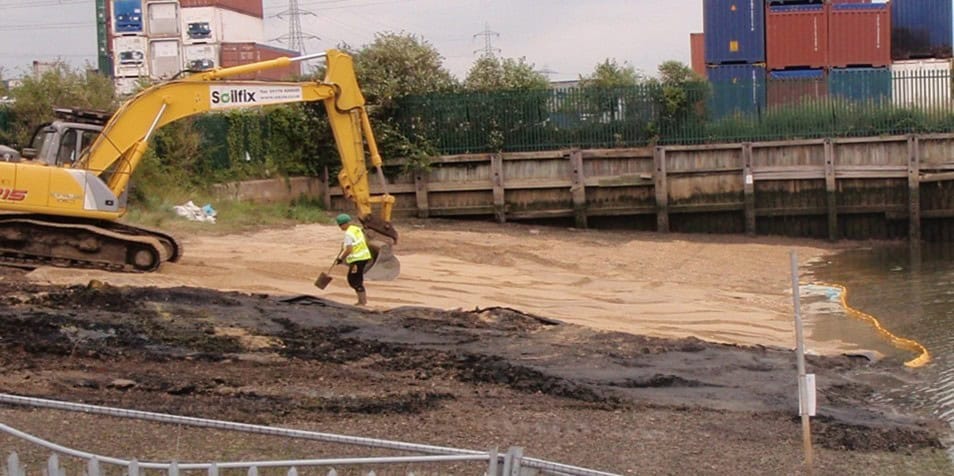
- 4,100m3 of silts/water were then pumped into large de-watering tubes laid on a large geomembrane lined, bunded treatment area on farmland adjacent to the pond—waters filtered out of the silts under gravity and the filtered water pumped back into the pond to maintain water levels;
- Dewatered silts were now in a sufficiently dry and stable condition to allow to be loaded into lorries for off site disposal to a permitted treatment facility. A total of 870tonnes of de-watered silts were removed off-site as hazardous waste to a permitted treatment facility.
Soilfix successfully achieved the goal of removing 65% of recoverable silts from the base of the lagoon which allowed the stormwater balancing system to return to acceptable flow capacity. In addition to the benefit of improved biodiversity, the total project savings were in excess of £500K compared to landfilling of wet silts, with 127nr less HGV loads on the local highways. Using our bespoke Calculator Tool, Greenhouse Gas emissions were reduced by 107te (a 72% reduction).