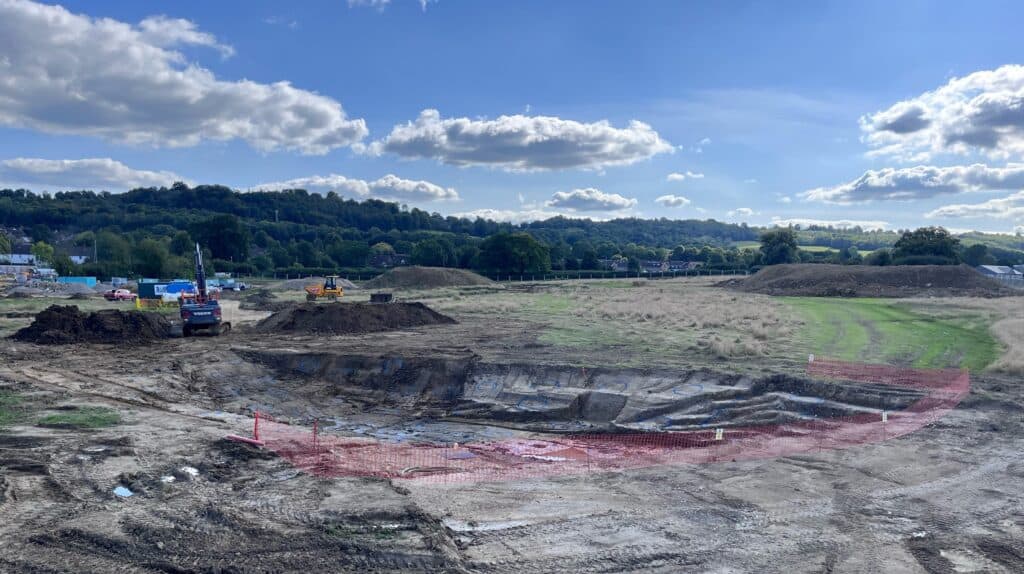
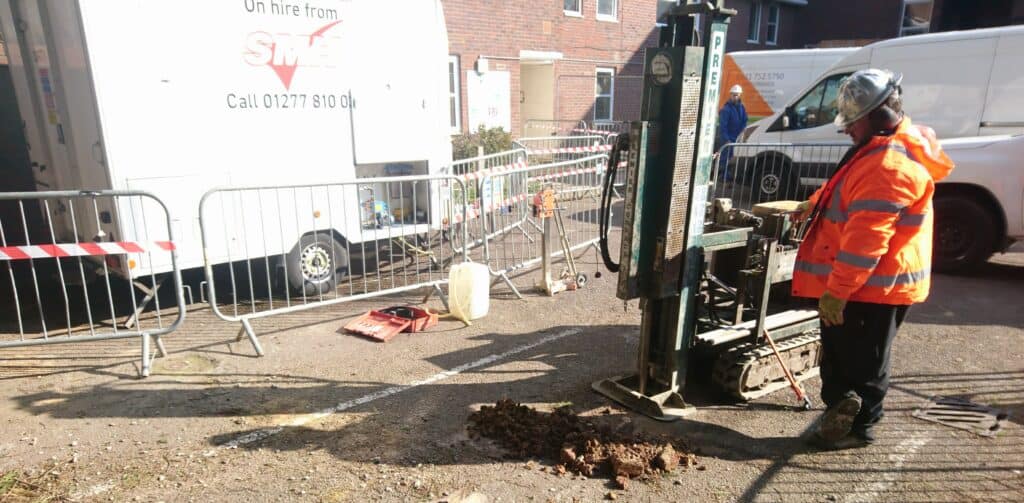
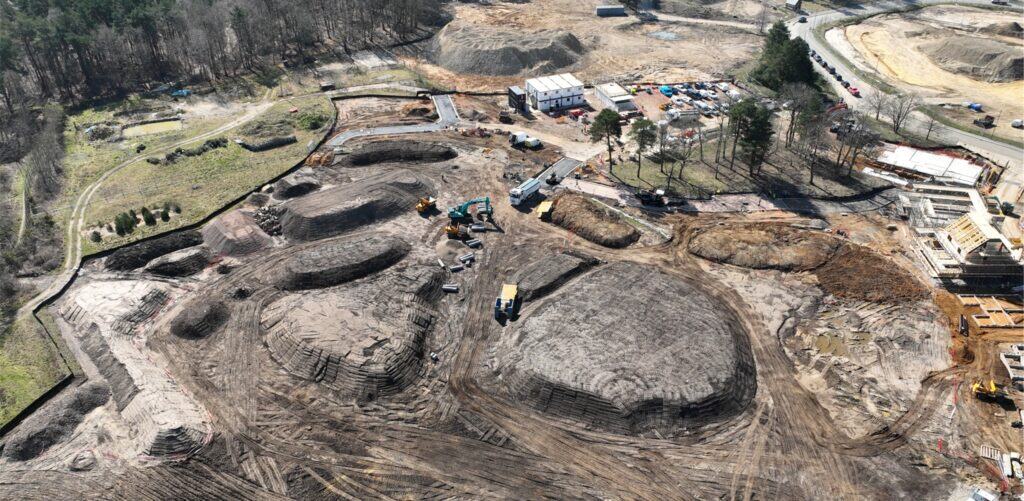
Our site in Deepcut was the first that I have visited, that is a working housing development site.
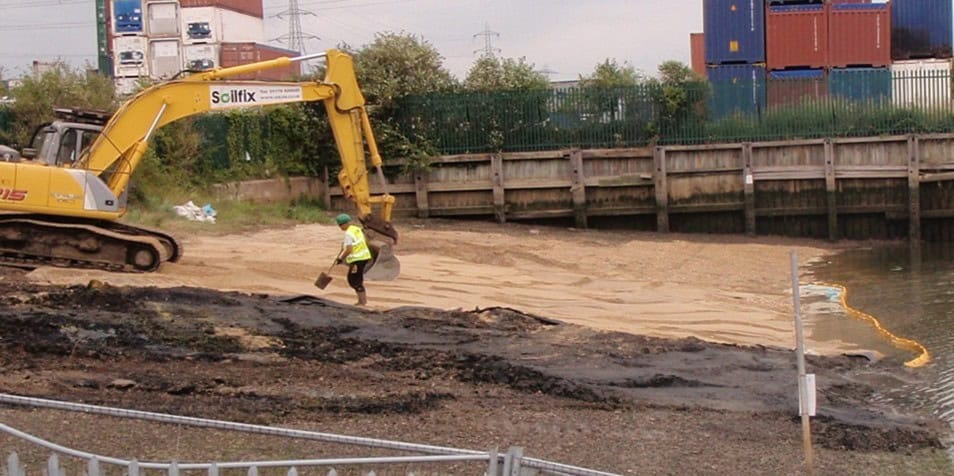
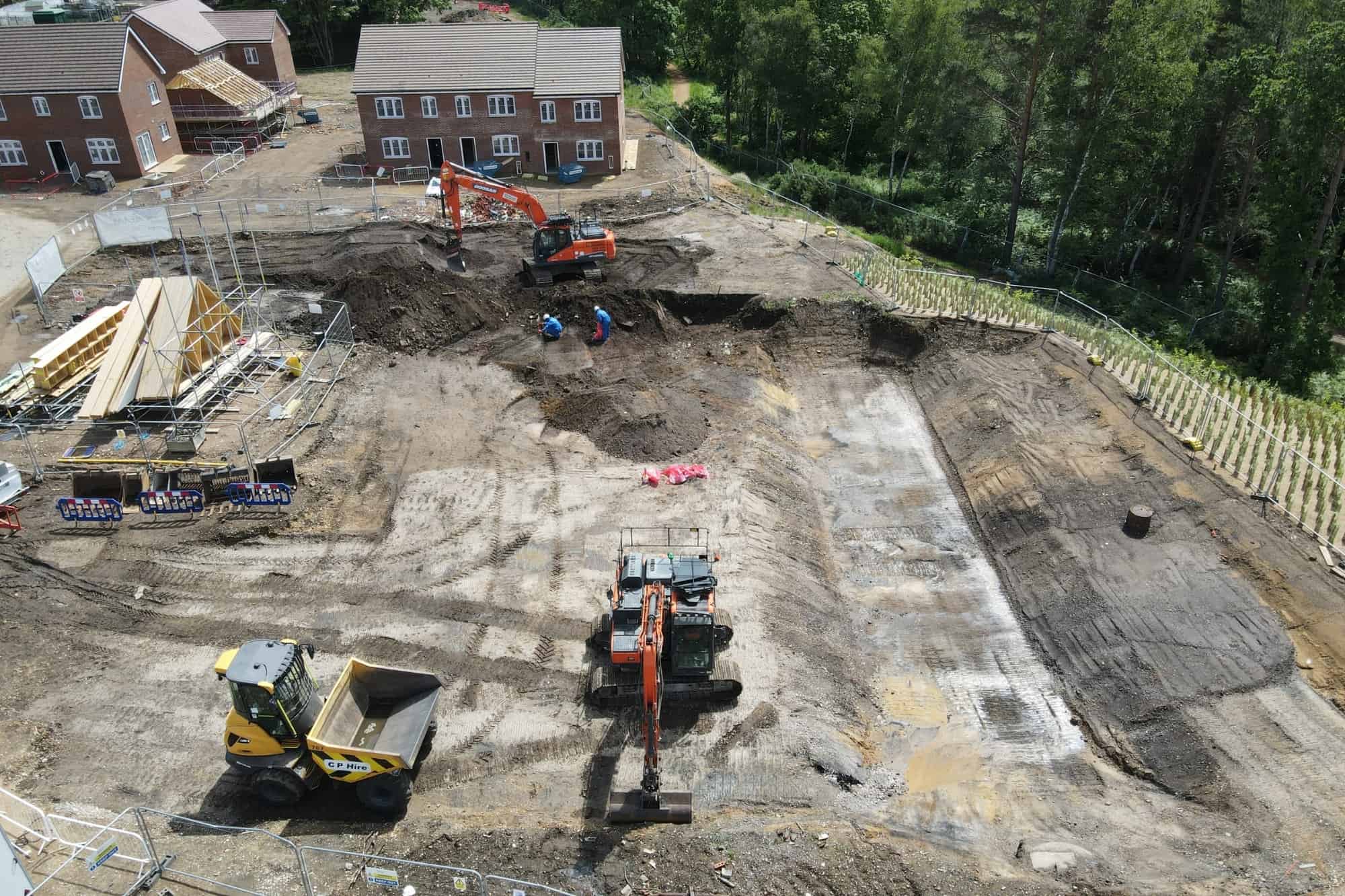
On that day, asbestos hand-picking was taking place by two certified operatives to make the area safe for the construction of houses and a stormwater attenuation system.
Having too many questions in mind, I thought I would ask someone who certainly knows his stuff – Lewis Hunt – HSQE Manager at Soilfix.
General points about asbestos:
- asbestos is a general name given to several naturally occurring minerals that have crystallised to form fibres
- asbestos fibres are strong, heat and chemical resistant and do not dissolve in water or evaporate
- there are 2 sub-groups; serpentine (white asbestos) and amphiboles (including blue and brown asbestos) of which serpentine was the more commonly used
- prior to use being banned, asbestos was used in many products including insulation material for buildings, boilers and pipes, car brakes and floor tiles
- the importation, supply and use of all asbestos has been banned in the UK since 1999; the amphibole type has been banned since 1985
- amphibole (blue and brown) asbestos is much more hazardous than serpentine (white) asbestos
- asbestos is not considered harmful when in large pieces and undamaged
- when damaged asbestos can release smaller fibres that can be breathed in or swallowed
- breathing in asbestos can lead to a condition called asbestosis that leads to an increased susceptibility to cancer
- asbestos has been classified as being carcinogenic to humans
How do you know if a site has asbestos?
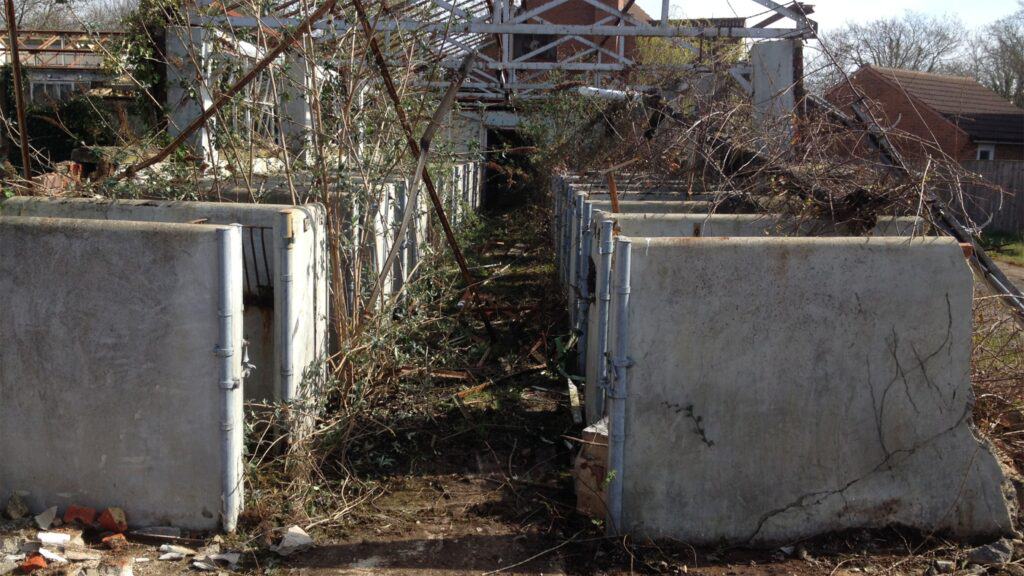
As contractors, we prefer to develop Brownfield sites. 9 out of 10 Brownfield sites will have some form of asbestos contamination, therefore as a contractor, we would visit a site with our eyes wide open and schedule a site investigation by an accredited asbestos removal company. There is an argument to suggest that all sites should be treated as having asbestos until proven otherwise though. Even on greenbelt land, asbestos could be hidden or buried depending on who historically owned the land.
How do you know where to look and check for asbestos?
There would be a few phases to the investigation
Stage 1 – desktop study, (using Google Earth, old ordnance survey maps etc) to assess the historical footprint of the site.
Once we understand the historical timeline of the land, we can ascertain the age of when asbestos-clad buildings were likely to be in existence. As examples, we would be looking at the rooftops of buildings, rainwater guttering and underground pipework which may have been lagged in asbestos.
Stage 2 – Targeted site investigation
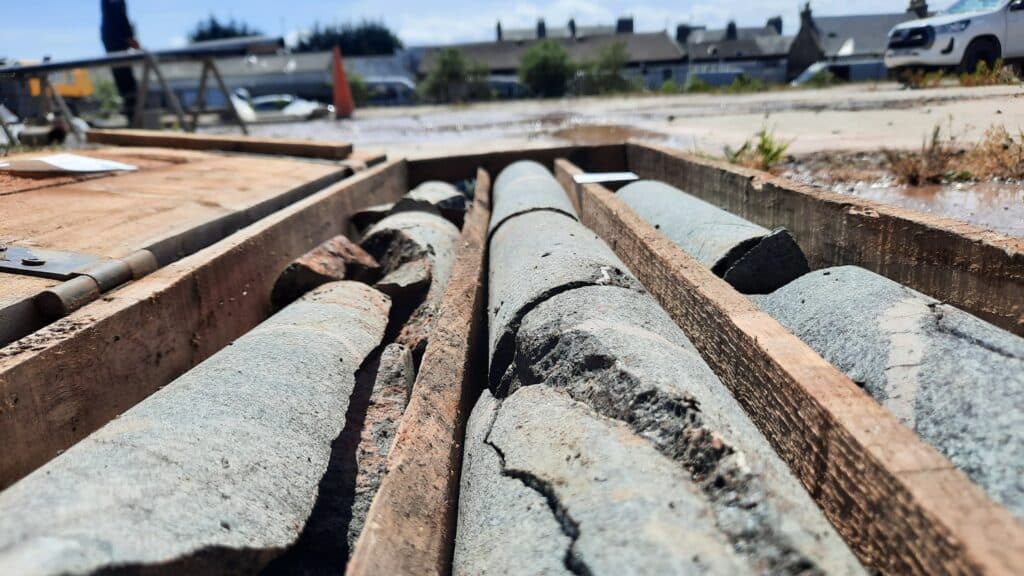
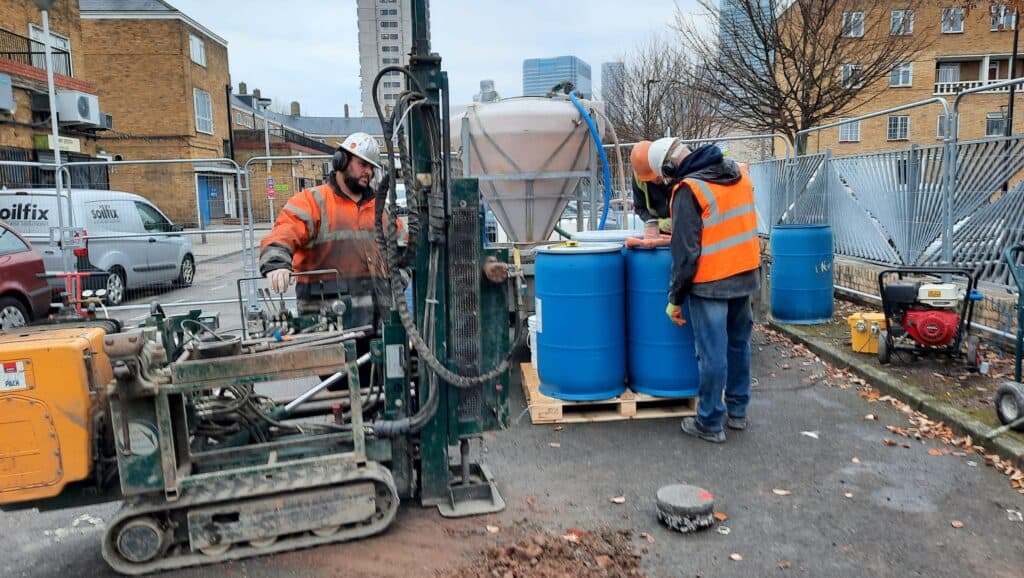
Depending on the site in question, this would involve using different plant machinery to obtain a cross-section of how the ground below the surface is made up and at what depths certain materials were found. Generally, asbestos will be found in the upper couple of metres of ‘made ground’ (i.e., anything that is not natural)
Historically a site investigation will only give you around 1% of the conditions below ground though.
It is like looking for the proverbial needle in a haystack!

- White – Chrysotile (white asbestos) is the most commonly used form of asbestos. It can be found today in the roofs, ceilings, walls and floors of homes and businesses. Manufacturers also used chrysotile asbestos in automobile brake linings, gaskets and boiler seals, and insulation for pipes, ducts and appliances.
- Blue – Crocidolite Asbestos, Crocidolite (blue asbestos) was commonly used to insulate steam engines. It was also used in some spray-on coatings, pipe insulation, plastics and cement products.
- Brown – Amosite Asbestos, was used most frequently in cement sheets and pipe insulation. It can also be found in insulating board, ceiling tiles and thermal insulation products.
Three other main variations that can be found on site are Tremolite, Anthophyllite and also Actinolite
Tremolite can be found as a contaminant in chrysotile asbestos
Anthophyllite was used in limited quantities for insulation products and construction materials. It also occurs as a contaminant in chrysotile asbestos
Actinolite – These fibres appear as trace contaminants in other asbestos products or can be found tightly packed together as an insulative material, as Actinolite expands when it is exposed to heat. Actinolite is a derivative form of Tremolite, and can also be woven into fabrics to give them insulative properties. The fibres have been found in sealants, paint, and have also appeared in drywall material.
A mixture of these asbestos fragments would have been found at Deepcut.
How far down do you dig?
At Deepcut, we excavated up to 2.5 metres at its largest depth at the site of the attenuation tank.
(An Attenuation Tank is essentially a large container/detention tank acting as a buffer to store excess rainwater and remove the risk of flooding of a residential area in a controlled way) and outside of that area 1 – 1.5 metres deep. If asbestos was found, then that area would be further explored in order to remove any visible fragments.
On the day that I visited Deepcut, there was a big downpour of rain.
If picking in the rain, does the rainwater affect the asbestos?
The rainwater will help retain the structure of the asbestos fibres within the matter that it is contained. However, if the asbestos is exposed to lots of rain, then allowed to dry, and then exposed to rain again, then a process called delamination takes place (Delamination is a mode of failure where material fractures into layers). The types of asbestos found on site are likely to be found in cement, therefore the cement will bond the fibres, reducing the risk of raw asbestos being exposed.
The PPE that has to be worn looks pretty extreme, almost like something from a chemical warfare scene in a film – how dangerous is asbestos?
Asbestos is hazardous and carries its own safety regulations. As it stands, there is no safe level of working with asbestos. The current regulations state that exposure must be controlled to as low as reasonably practicable.
Asbestos exposure causes lung cancer, asbestosis and a rare cancer called mesothelioma. Prolonged exposure to asbestos increases the risk of developing these diseases. Symptoms can take up to 20 years to develop after exposure, which is why prevention, as extreme as it looks, is vital.
What procedures are in place to assure that enough asbestos has been safely removed, ready for the next stage?
Asbestos fibres are very small and invisible to the naked eye. We cannot say with hand on heart that a site is completely safe and clean of asbestos. However, we endeavour to put every control in place to reduce the risk of exposure to feature site users to as low as possible. The entire area will be capped with buildings paved areas or a robust capping layer of imported clean soil in landscape and garden areas, to cut off the pathway between end users and the remediated ground. We strive to reduce the percentage of trace asbestos in soils to below a certain level so that it is safe for the groundworkers to come in and do their job (i.e. dig out the services/service corridors for pipework or cables) before these ‘belt and braces’ remediation measures are implemented.
A fascinating insight into asbestos and I for one will certainly be looking at our groundwork projects in a different light in future!
written by Zoe Rusga