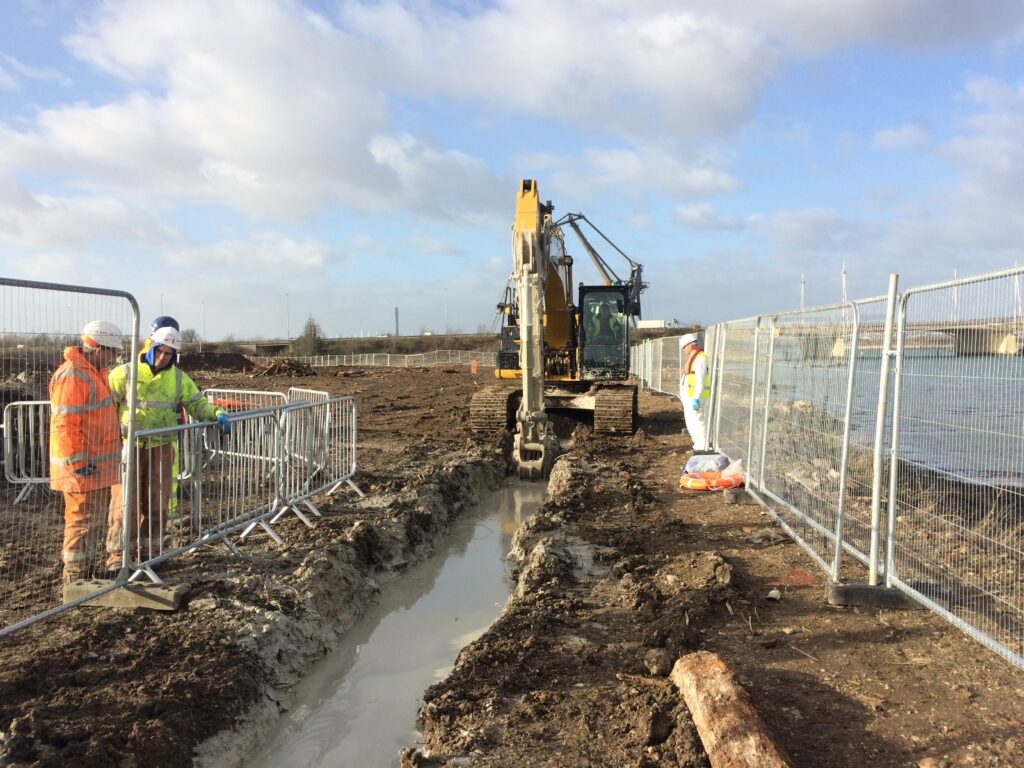
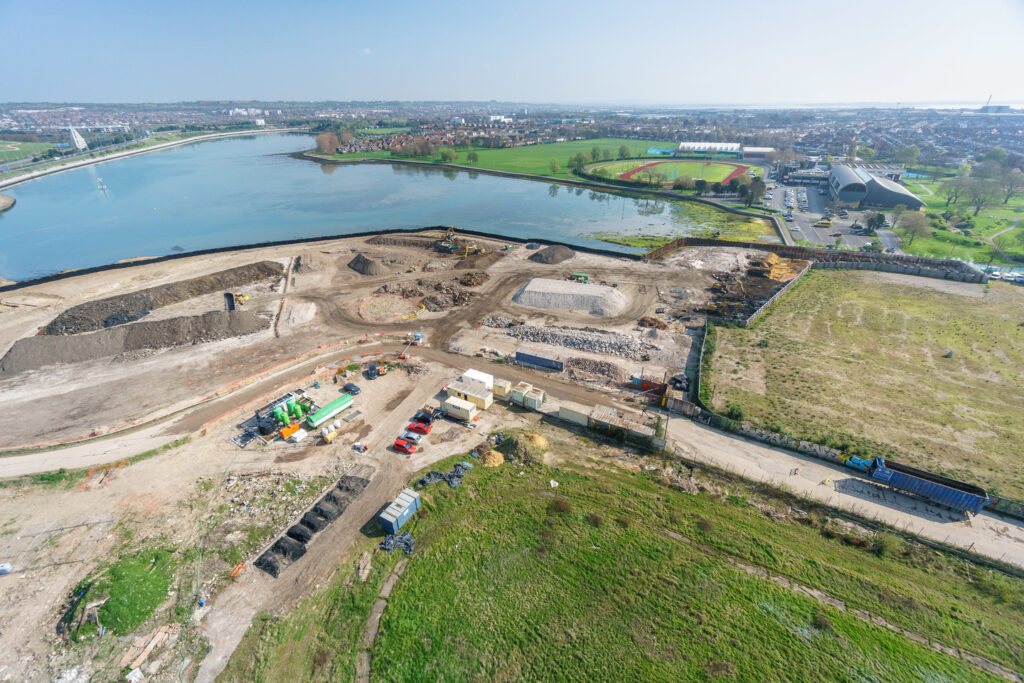
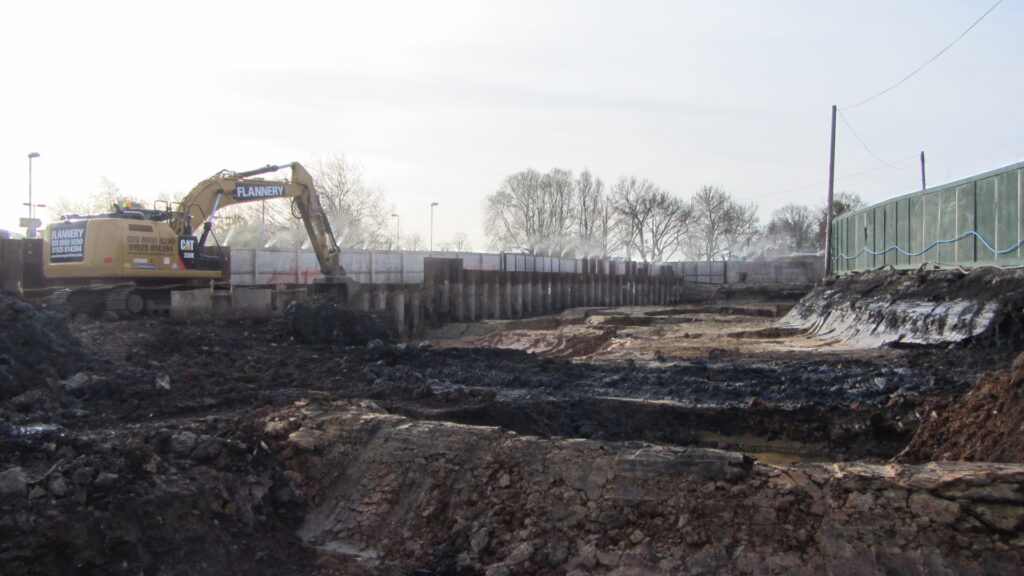
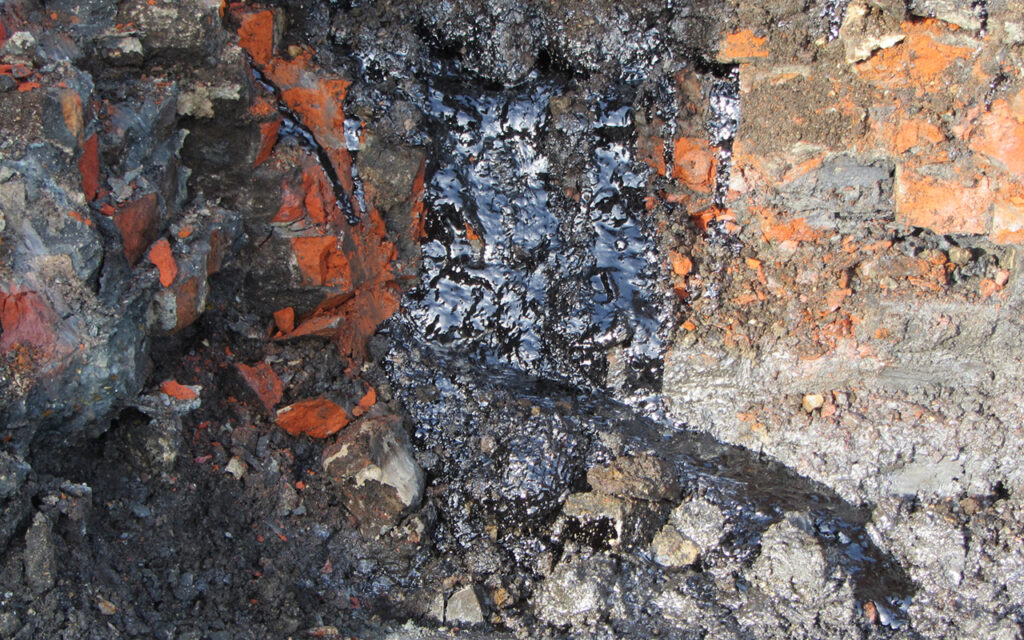
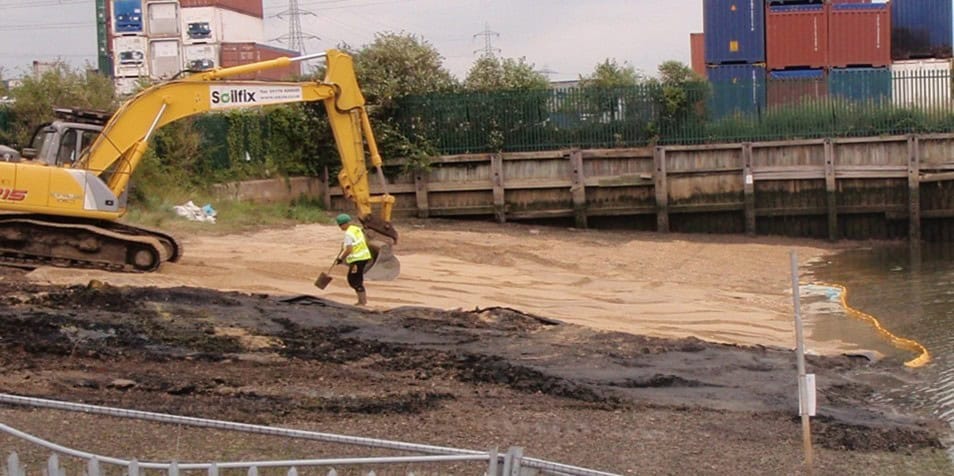
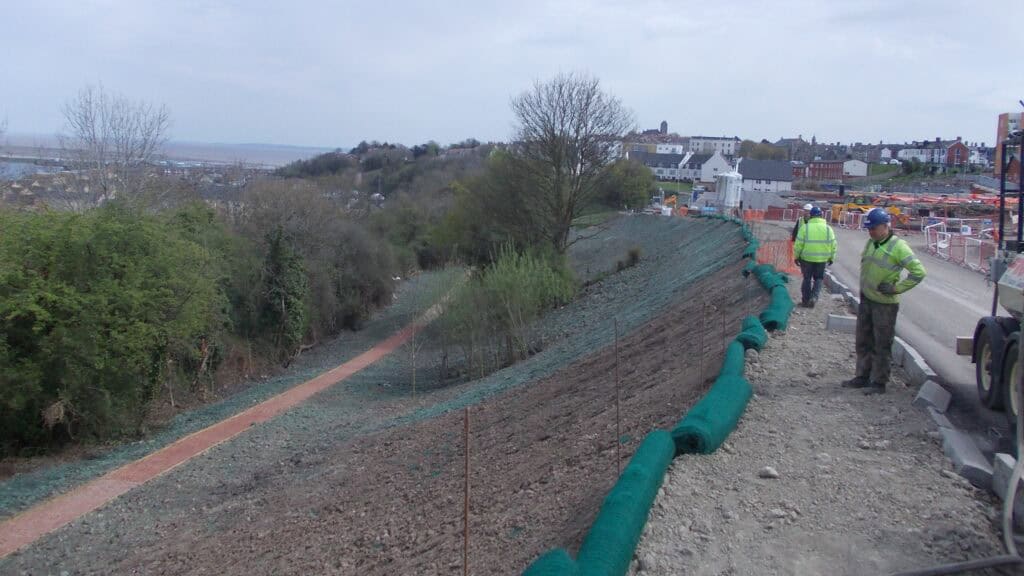
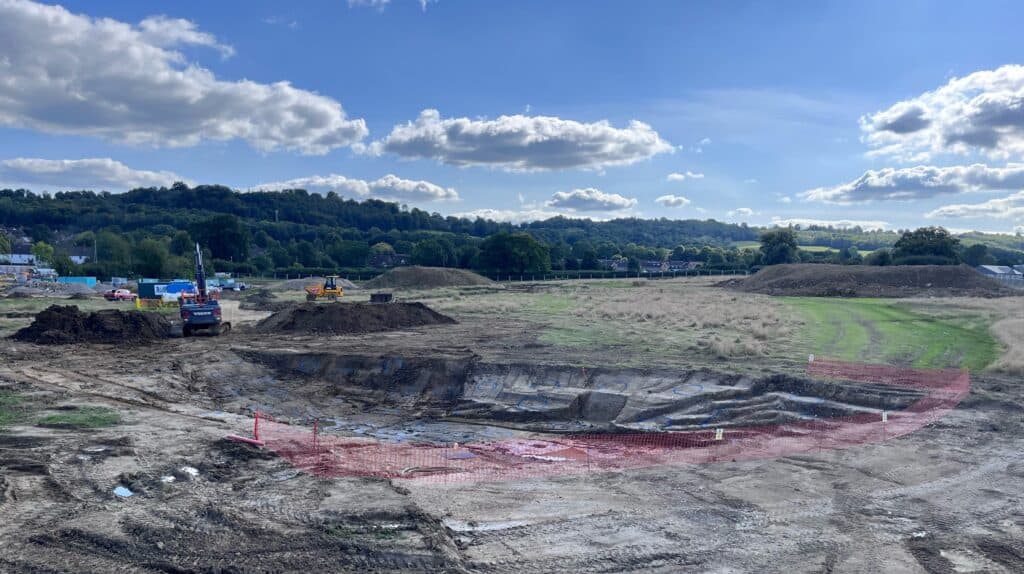
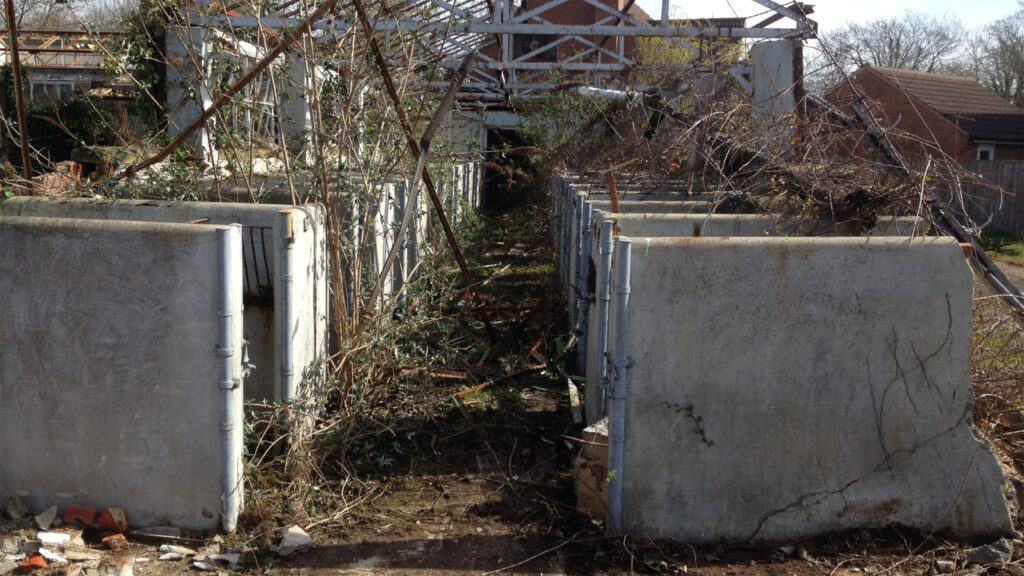
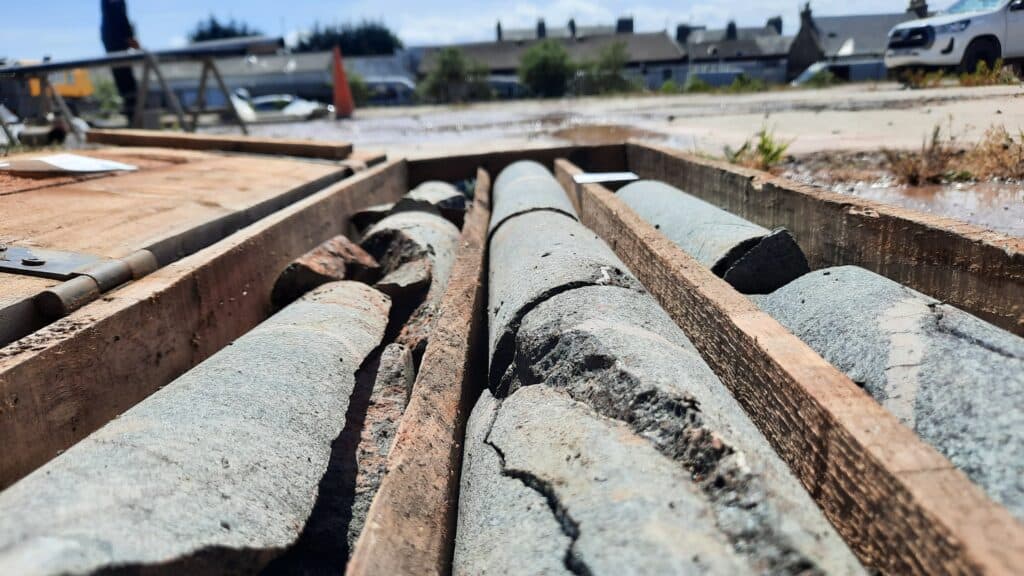
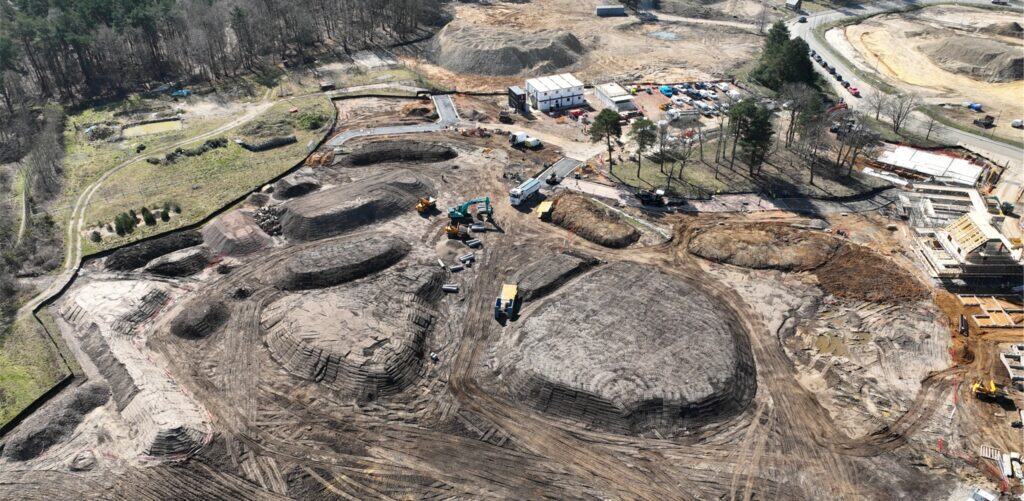
Several stands of Japanese Knotweed (JK) infestation are also present. An additional challenge was the presence of historically landfilled materials, significant in-ground obstructions including buried concrete barges and risk of encountering unexploded ordnance (UXO). Soilfix is currently carrying out remediation works in support of a large regeneration scheme to return previously derelict land to 525nr residential houses / apartments with coastal footpath and amenity space.
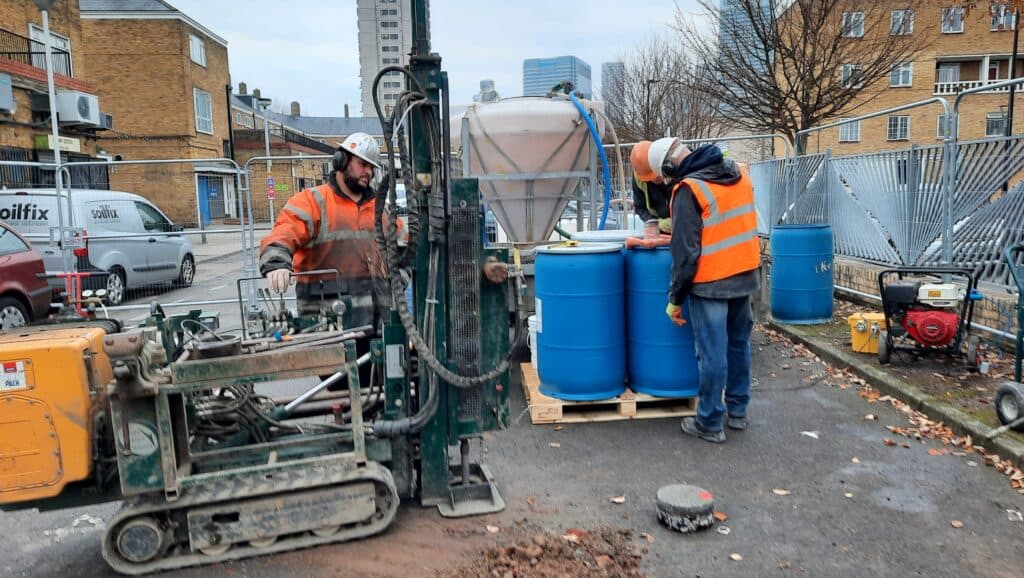
Soilfix has designed and is currently implementing a multi-disciplinary remediation scheme, comprising:
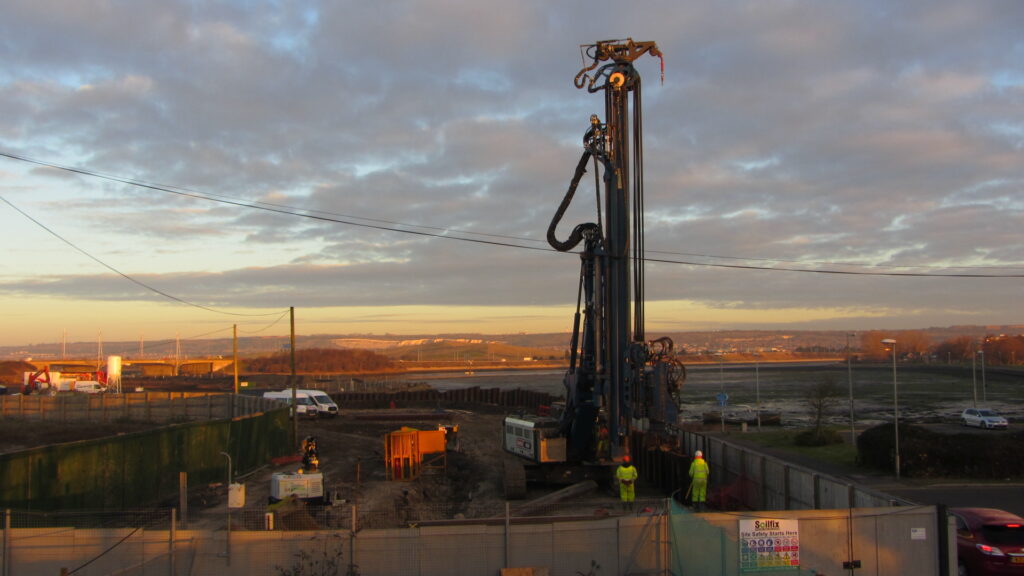
- Installation & CQA testing of a 325m length slurry cut-off barrier around the foreshore to protect Tipner Lakes, with depths up to 7.5mbgl – Soilfix’s first in-house installation of such a barrier. Upon completion of remediation works, 2nr Permeable Reactive Treatment Sections will be constructed within the barrier to polish groundwater’s prior to discharge into protected waters;
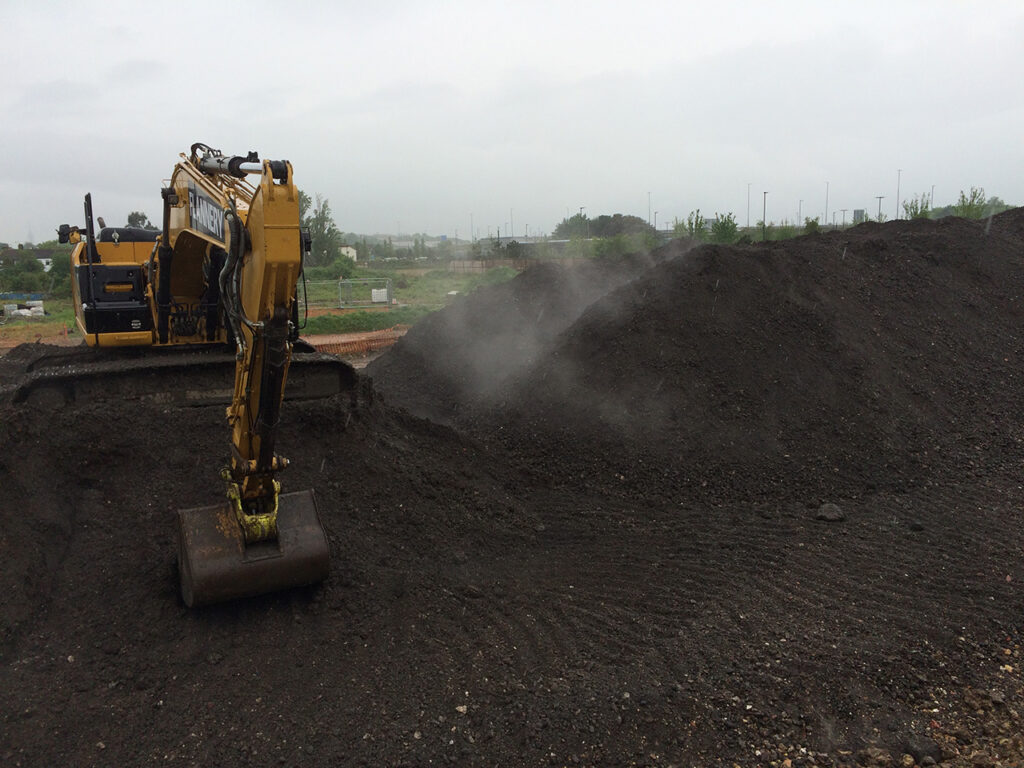
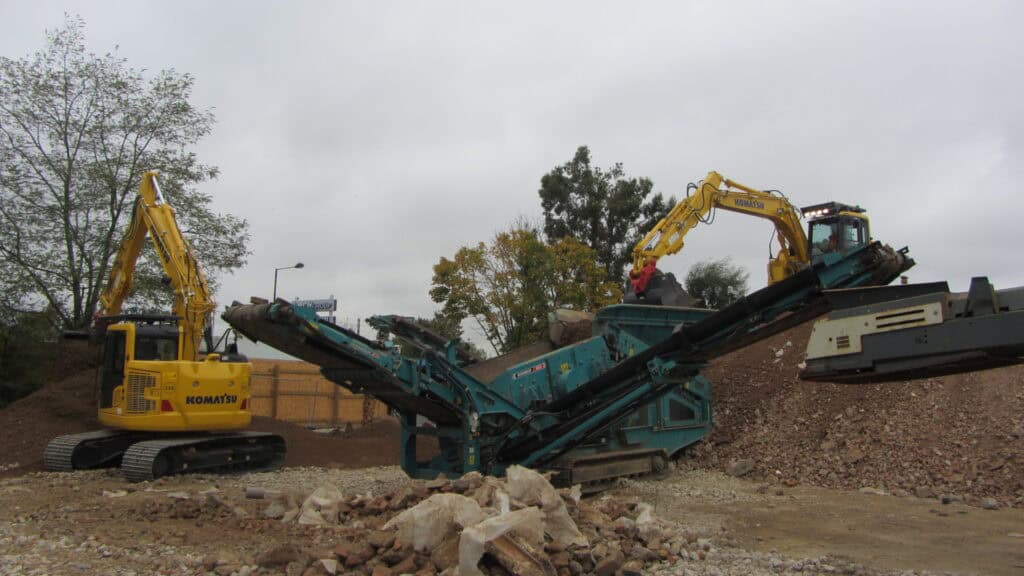
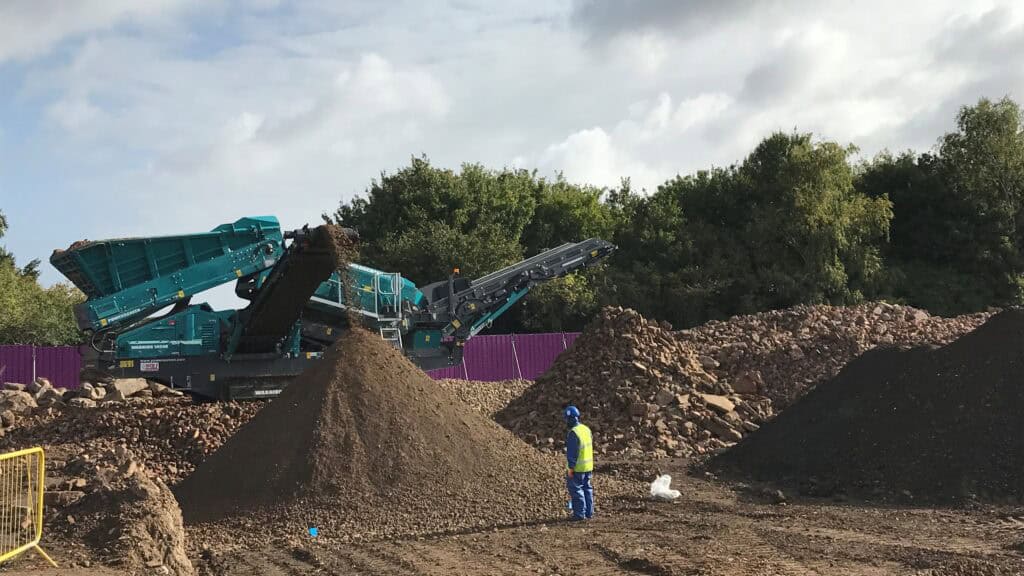
- Excavation and processing of 50,000m3 prior to further treatments. Ex-situ augmented bioremediation of 20,000m3 gross hydrocarbon contaminated soils using cultured bacteria and 40,000m3 lime/cement stabilisation will be undertaken;
- Sheet-piling carried out to facilitate deep excavation works, up to 6.2mbgl;
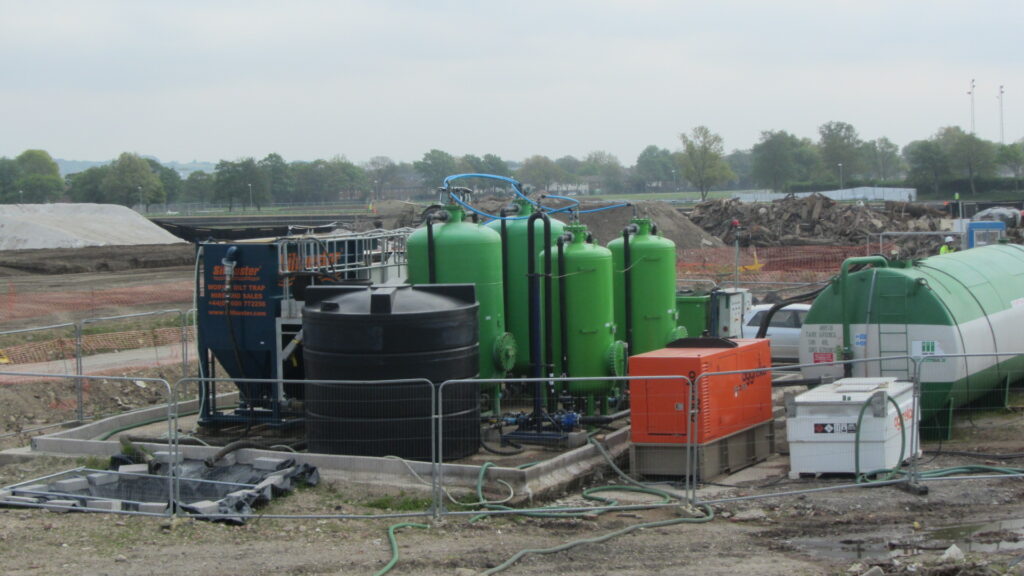
Comprehensive groundwater treatment system with multi-stage separation and settlement tanks to remove free phase and dissolved hydrocarbons prior to discharge; - Comprehensive odour neutralisation measures during soil excavation and processing, including portable rotary atomisers and fixed nozzle systems;
- Excavation, pre-treatment and encapsulation of JK contaminated soils within copper-woven root barriers;
- Targeted obstructions removal in the larger infilled former shipyard area to clear pile cluster locations of impediments;
- Modular treatment of excavated soils containing ACM fragments using screening / hand-picking in accordance with CAR2012; and,
- Process/crushing of segregated clean hard-core arising from the works for re-use as a granular lower capping layer on hi-visibility marker geotextile.
Off-site disposal will be limited to grossly contaminated materials and residues arising from the works, with approximately 99% materials recovery envisaged. All works are being carried out in full compliance with CL:AIRE Code of Practice and Environmental Permitting requirements.